









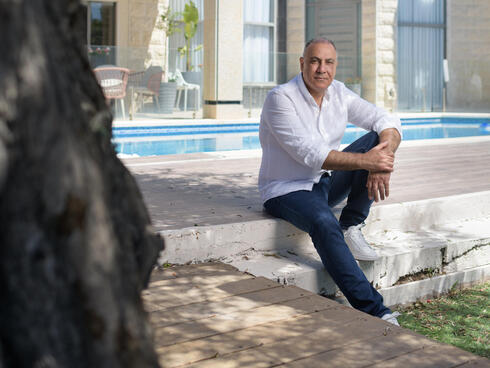
From a Nazareth carpentry shop to Intel’s inner circle
Fadi Aboud became one of Intel’s top engineers after growing up without a single technology role model. Now he is fighting to open the industry’s doors to Israel’s Arab community.
During school holidays, Fadi Aboud would go help his father. The 10-year-old boy would accompany his father to the carpentry shop in Nazareth, observe, assist and learn. "My father couldn't read or write, but he could do math," he says today, looking back from a distance of about 45 years. "He did everything in his head. He knew how to measure angles, design furniture, and solve complex engineering problems almost without formulas and without a computer. Today I understand that he could have been an excellent engineer. He simply never had the opportunity."
Aboud, unlike his father, managed to find that opportunity, and has been trying to create it for more and more people ever since. He studied electrical engineering at the Technion, joined Intel about 30 years ago, and today, at the age of 56, holds the rank of Fellow, a senior technological position at the company equivalent to a vice president. He manages a global team of hundreds of engineers, leads one of the critical areas in Intel's processor development, and is responsible for processor performance, with a particular focus on power consumption. He is at the center of the company's attempt to return to the forefront of the global chip industry. At the same time, as one of Israel's most senior Arab high-tech figures, he is also one of the most prominent advocates for expanding the integration of Arab citizens into the technology sector.
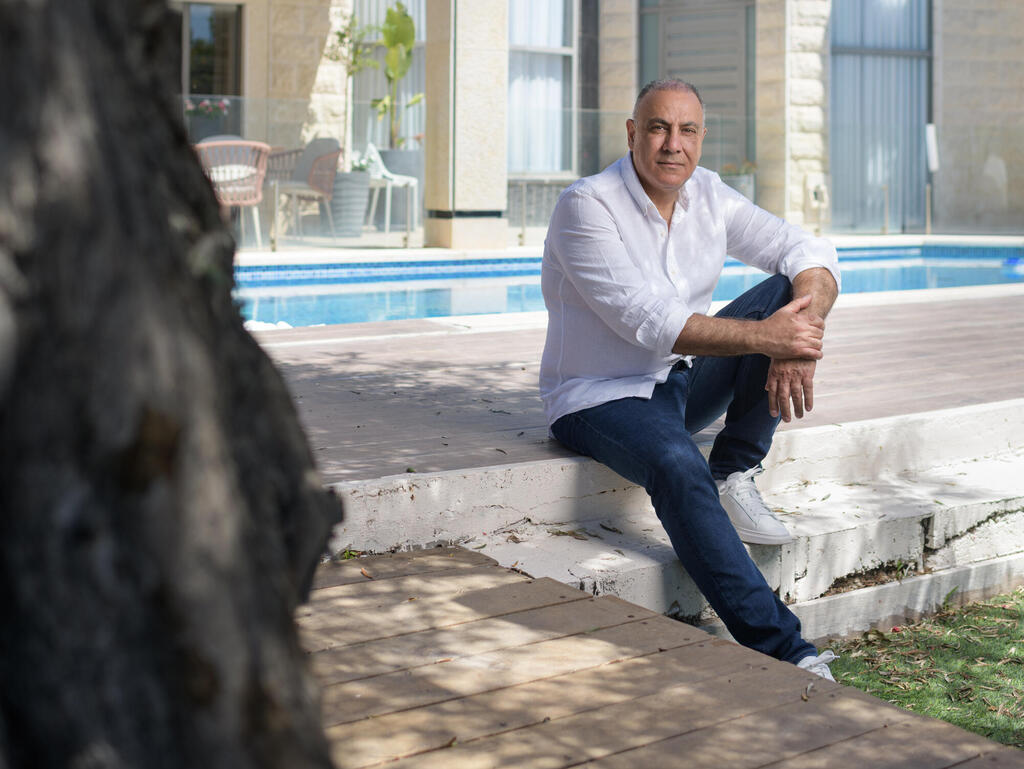
He arrived at this position almost by accident. As a child in the early 1980s, high-tech was not part of his world, certainly not within Arab society. Aboud did see educated professionals around him, doctors, teachers and civil engineers, but mostly craftsmen. "I didn't have any technological role models to look up to," he explains in an exclusive interview, the first of his life, with Calcalist. "I myself came to technology almost by accident, and thanks to a priest. I studied at St. Joseph's High School, and the priest who ran it decided to open an electronics major. Looking back today, I understand what vision he had. It was 1983, who even thought about electronics as a profession of the future back then?"
Aboud studied in the first cohort of the program, fell in love with the field, and decided to continue his studies at the Technion. His father, a carpenter, and his mother, a kindergarten teacher, did not really know where it would lead. "There were no examples of this. The few people from our society who studied electrical engineering became teachers or left abroad. There were no other examples. So my father asked me what you actually do with electrical engineering. I didn't have an answer. But my parents told me: 'Do what you think is right.' What mattered to them was that I study. They supported me in every way, both financially and emotionally, even though they didn't really know what the path would lead to."
The lack of role models was also evident at the Technion. In a class of hundreds of electrical engineering students, only four other Arab students studied alongside him. And he struggled throughout his studies. "It was a shocking experience. I would sit in lectures and understand almost nothing. I had learned Hebrew in school, but we didn't really use it. Our entire lives were conducted in Arabic, and suddenly everything was in Hebrew. It's the same today, my son is studying computer science at Tel Aviv University, and I see that he also struggles with the language. But at least he can watch lectures in English, learn from YouTube, and use ChatGPT. We didn't have any of that."
And what did you do?
"I sat in the Technion library and watched videotapes of the courses over and over again until I understood."
The language barrier was a significant challenge, but not the only one. "In four years at the Technion, I didn't have a single Jewish friend. Not because of hostility, everyone simply stayed in their own world. Apart from saying 'shalom' or 'good morning,' there wasn't really anyone I sat with, talked to, or built a relationship with. I connected with the Arab students who studied with me and with the small Arab community at the Technion. Unfortunately, this situation has not changed dramatically, and my son is living in a fairly similar reality."
In the early 1990s, toward the end of his studies, Aboud tried to join Intel. "And I failed. I can say today that it wasn't racism, or at least it wasn't only racism. I lacked engineering knowledge, and I didn't know how to pass a job interview. I didn't feel comfortable speaking Hebrew. I couldn't express myself freely or answer the questions properly. When they asked me, 'Tell me about yourself,' I didn't know what to say. I had never talked about myself that way.
"In Western culture, you're expected to explain what you're good at and why you should be chosen. But I came from a culture where you don't brag about what you've done. It isn't natural. Suddenly I had to market myself, and in Hebrew."
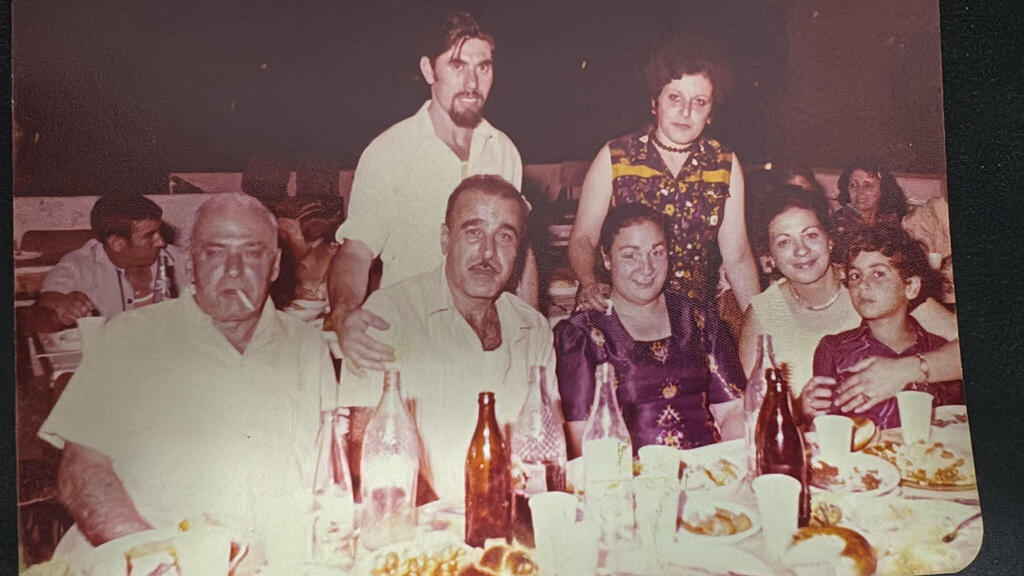
But then a role model emerged, someone who changed the course of his life. This time it was not a priest, but an engineer, an Arab engineer who was already working at Intel. "He prepared me for the interview so I could try again. He didn't fill in my missing engineering knowledge, but he taught me how to speak, how to present myself and how to explain my abilities. He told me: 'The problem is not your abilities. The problem is that you simply don't know how to market yourself.' That sentence has stayed with me ever since.
"I practiced with him over and over again, and he helped me gain confidence. I had a second interview, and they called me to say that I had passed. That was in 1991. The next day I arrived at the company's offices in Haifa and said: 'I've come to work.' The security guards didn't understand what I wanted. They told me: 'Wait, first you need to receive a job offer, salary details and employment terms.' I didn't even know that was part of the process," he laughs. "For me, if I was accepted, I was coming to work."
The difficulties he experienced integrating into the industry led him over the years to help others seeking to follow a similar path. In 2016, he joined Tsofen-Tashbik, an Arab-Jewish association founded in Nazareth in 2008 to create opportunities for Arabs in the technology sector, help them pursue studies and find employment, build more role models and mentors, and increase their participation in the growth of Israel's high-tech industry. Today, he serves as co-chairman of the organization.
"The integration of Arabs into high-tech is key to creating significant change in our society, and in Israel as a whole," he explains. "In Israel, the encounter between Arabs and Jews is often between service providers and customers. In high-tech, there is a real encounter: you are colleagues, you work together on problems, you are on the same level, and you build relationships.
"Beyond that, working in international companies exposes people to the world. You work with people from different countries, learn about other cultures and understand that there is a much broader reality beyond the bubble you grew up in. It changes the way people think, which affects their lives and the society around them.
"I think about this especially in the context of women. Today, around 60% of Arab engineering students at leading universities are women. If they integrate into high-tech, build careers and achieve financial independence, this could become one of the most significant engines of change in Arab society. Successful women become role models, change the family unit and influence society as a whole."
The issue of role models comes up again when Aboud discusses one of the most serious challenges facing Arab society today: violence. "Crime is what scares me the most. It is something that happens every day. I live in the Galilee, but my entire family is in Nazareth. My children studied there, I am there almost every day, and I am constantly worried.
"Even people who have nothing to do with crime are affected, and no one is really addressing the problem. Sometimes there is even a feeling that there isn't enough desire to solve it. And it isn't only related to economic conditions. When I was young, the economic situation was harder, but we did not see crime on the scale we see today.
"This is happening because of criminal organizations, and it is the state's responsibility to fight them. But we also have a responsibility to create different role models for young people in Arab society. They need to see that it is possible to succeed through education, work and entrepreneurship, not only through the power and money offered by criminal organizations. That is part of the solution."
So how can the integration of Arabs in high-tech be increased?
"First of all, we have already touched on the issue of language, which is a very important factor. If we want more Arab students to succeed at universities, we need to help them with Hebrew already in their first year. This can make all the difference. In the following years, the gap narrows, but the first year is very difficult, and you can see it in Arab students' grades. In the first year, they are no less talented, but they struggle with the language. By the third year, they have not become smarter, they simply understand Hebrew better."
What happens in the transition between studies and work?
"Arabs make up almost one-fifth of students in technological tracks, but only about 5% of engineers in high-tech, even in companies located in the north (according to CBS and OECD data)."
Because of racism?
"Because of implicit racism. I am sure there are many excellent Arab engineers who could bring real business value to companies, but they encounter barriers. Some stem from unconscious biases, and some may be conscious. The problem is that people do not always stop to ask whether the hiring process is really giving them a fair chance."
What are the barriers?
"The first is those soft skills, not professional knowledge, but the ability to interview, express yourself and present your abilities. Graduates know how to solve problems and they know math, but like me, they get lost when they are asked to 'tell me about yourself.'
"I remember interviews in which a Jewish candidate spoke confidently about himself, presented his achievements and told an excellent story. After him came an Arab candidate who may have accomplished ten times more, but barely spoke about his successes because, to him, it felt like bragging. If the manager does not understand this cultural difference, they may mistakenly conclude that the first candidate is better.
"So the candidates need to be prepared, but so do the interviewers. They need to understand that they are sitting across from people from different backgrounds. If a candidate talks less about himself, it does not mean he is less talented. Just as a manager needs to understand the culture of employees from India or Malaysia in order to get the best out of them, our culture also needs to be understood, in order to better identify talent and build stronger teams."
4 View gallery
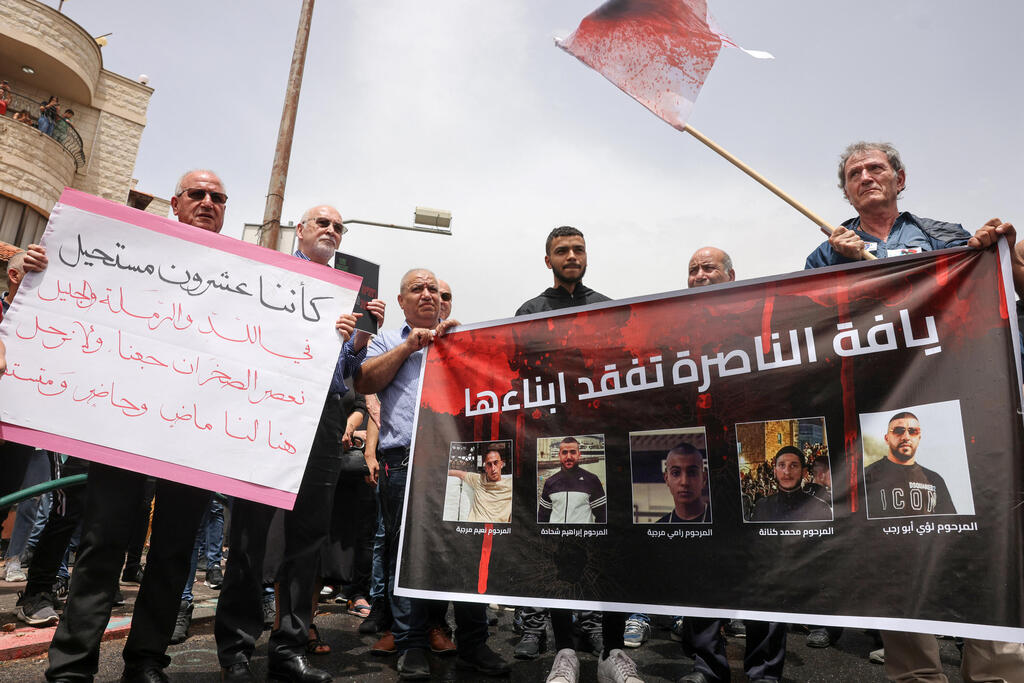
A protest against violence in Arab society held near Nazareth, 2023
(Ahmad Gharabli/AFP)
That is why Tsofen-Tashbik works both with leading companies in the economy and with students and graduates. The organization offers training and courses, personal guidance and mentoring, networking and community-building activities, as well as collaborations with human resources professionals to adapt recruitment processes for Arab candidates. However, it does not advocate affirmative action.
In quite a few places and fields, affirmative action has been shown to help integration. Even if it temporarily lowers the acceptance threshold, things eventually level out.
"And yet, I do not want companies to hire someone because they are Arab. I want them to hire the best engineer. The only path is excellence. If you adapt the process to Arab candidates, you will not have to lower the bar. On the contrary, you will discover excellent people who simply fell through the cracks.
"We did this at Intel as well. In 2018, we established the Arab Employee Forum in the company, and people asked us, 'Why do we need it? There are employees already.' We said, 'Because we need more. You are missing out on a huge pool of excellent engineers because the recruitment system is built around cultural codes that do not always suit them. That is what needs to change.'
"But we never approached management and said, 'You need to hire Arab employees because it is the right thing to do.' We came with a business argument: Do not miss out on talented employees. And over the years, we have seen that the more Arab employees there are in a company, the easier it becomes to recruit additional employees. Managers become familiar with the culture, understand that there are differences in the way people present themselves, and stop interpreting those differences as insecurity or a lack of ability."
And what about the climb up the ranks of high-tech companies? There are almost no Arabs at the top.
"I have learned over the years that most people use perhaps half of their abilities. If you give people responsibility and believe in them, they surprise you. But there are still people who find it difficult to accept an Arab manager leading a large organization. And it must be said honestly that there is also an internal barrier within Arab society."
What does that mean?
"In Western culture, you are expected to say what you want and ask for a promotion. In the culture where I grew up, you take what you are given, work hard and trust that managers will recognize your value. Many Arab workers do not ask for promotions, not because they do not want them, but because it is simply not natural for them.
"Many Arab engineers also do not aspire to management positions. They feel more secure on the technical track, partly because their communication and leadership skills are less developed, or at least that is how they perceive themselves. So they remain in their comfort zone.
"I myself have discovered over the years that the background I came from can actually be a managerial advantage. I grew up in a less individualistic and more collaborative culture, one based on family and teamwork. Today, when I manage global teams with employees from India, Malaysia, Mexico and other countries, these characteristics help me. But it takes time to understand that the things you think are weaknesses can actually be strengths."
And what about entrepreneurship? There are excellent engineers, and some are already advancing to senior positions, but a large high-tech company founded by Arab entrepreneurs has not yet emerged.
"There are several reasons for this. If I look at my generation, simply being accepted to Intel was already a major achievement. I remember not believing that they had accepted me. So leaving a stable job and starting a startup, without knowing whether you would succeed or fail, was almost unimaginable.
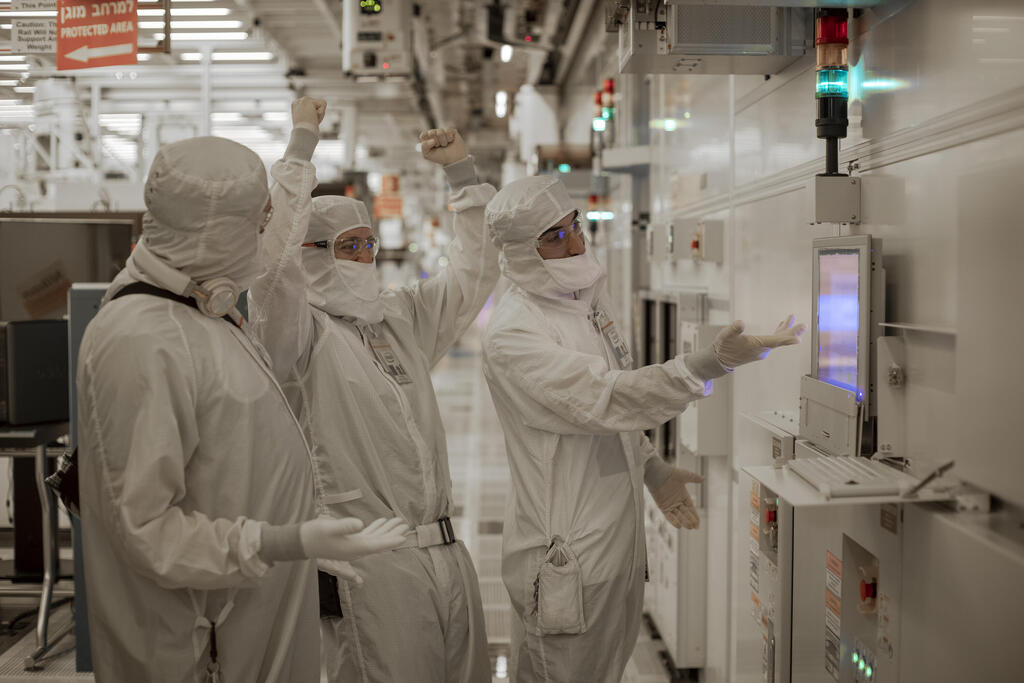
"We had a strong need for job security. We did not know whether we would be able to find another good job after starting a company that failed, for example, so we held on to what we had with both hands. The younger generation is already more willing to take risks, but there is still a cultural component, the same tendency to choose the safe and stable path that characterizes traditional Arab society, and the same avoidance of risk.
"This does not mean there are no entrepreneurs or that there is no talent. But the culture definitely pushes people more toward security and less toward the gamble involved in building a startup."
After October 7, is it harder to be an Arab in high-tech, or to get a job in the industry?
"Today it is harder to get a listening ear from high-tech companies when it comes to integrating Arab workers. I cannot say that this is only because of the war. There was also the slowdown in high-tech and the artificial intelligence revolution, which affected the entire market. But the feeling is that the issue of integrating Arab society is no longer where it was a few years ago.
"In the past, managers were more open to hearing about the issue and saw it as an important goal. Today there is much less willingness to engage with it. We see this change on the ground, and it is very noticeable."
Why did this happen?
"Two parallel processes took place, one is the polarization in Israel, and the other happened in the United States under Donald Trump. In Israel, there are ministers who convey very harsh messages toward Arabs, and that certainly does not help.
"This government is a catastrophe in everything related to Arab society. And globally, for years, high-tech companies talked about Diversity and Inclusion not only as a moral value but also as a business advantage. But when the broader political message changed, many companies stopped talking about it. Even those that continued working in the field did so much more quietly. It was quite depressing to see how quickly the discourse changed."
So it is also the government's fault.
"Also, but not only. It is very easy to shift all responsibility onto the government. I do not think the government is blameless in this area, but it is also convenient for high-tech managers to say that this is the country's problem.
"In the end, if there are 20% Arab engineering students and only about 5% Arab engineers in the industry, no one is stopping high-tech companies from asking why this is happening."
And what is your responsibility?
"Arab society needs to develop capabilities that will help it become less dependent. There is already a significant core of engineers and talented people, and the question is how to turn them into entrepreneurs.
"We need to establish more companies and more ventures aimed at the global market, rather than simply waiting for companies like Intel or Nvidia to hire us. Even a small startup that solves a problem and employs several engineers is a business in its own right. We need to build our own growth engines and not rely solely on Israeli employers."
And all this during a period of crisis in high-tech.
"Yes, and it is clear that the crisis is particularly damaging to those who are now trying to enter the industry and to efforts to increase representation of underrepresented groups. When there are fewer jobs and a flood of experienced workers who have been laid off, competition for each position becomes much tougher, and inexperienced candidates naturally have a lower chance of integrating.
"But it is not yet clear whether this is simply a transition period or a new reality. In any case, it puts us in a dilemma. For years, our strategy was simple, there was high demand for workers, and all we had to do was connect suitable candidates with employers. This model worked well, but today it is no longer enough when demand itself has declined.
"Therefore, we are reexamining our entire strategy. We are asking whether we need to pivot, invest in additional professions beyond software development, help graduates move into fields such as physics or chemistry, and perhaps use the AI revolution to encourage more entrepreneurship."
You say it is not yet clear whether we are in a transition period, but what might be the impact of politics on the situation?
"Another Netanyahu government could continue to harm high-tech. This is a field built on human capital, leading universities, research and development, and connections to the world.
"If Israel continues becoming more isolated, I do not see a situation in which leading universities and people around the world will want to remain connected to us. I already see this trend today, and I also fear a brain drain of people who have opportunities to live and work elsewhere."
Aboud left Nazareth to live in a larger house in the Galilee, alongside both Jews and Arabs, with his wife, a pharmacist, and their three sons, one a computer science student and two recent high school graduates. Between the Galilee, his office in Haifa, and daily visits to Nazareth, he also spends entire months abroad, mainly in the United States. Because ultimately, beyond the broader challenge of integrating Arabs into high-tech and his social mission, he works for Intel, and he has a great deal of work to do. "There were very difficult years at the company," admits Aboud. "There were people who were already talking about the possibility that Intel might not survive in the format we knew."
Intel’s focus on controlling the entire chip production chain, from design to manufacturing, gave it a major advantage for decades. But that same model became a disadvantage when Taiwan’s TSMC began producing more advanced chips for other companies, including giants such as Apple and Nvidia, while also achieving higher profitability. At the same time, Intel missed two major technological revolutions that reshaped the chip industry, smartphones and artificial intelligence.
In the early days of the smartphone era, Apple approached Intel about producing the first processor for the iPhone, but Intel was focused on selling processors for high-end personal computers and was not interested in manufacturing cheaper chips for phones. It was a major missed opportunity. In artificial intelligence, while Intel continued to focus on CPU processors, Nvidia invested in graphics processing units (GPUs). Originally designed for gaming, GPUs turned out to be ideally suited for training AI models, allowing Nvidia to emerge as the leader of one of the biggest technological transformations of the past decade. As a result, Intel went from being the company that shaped the future of the industry to a company trying to catch up.
"We had to pivot," explains Aboud. "You can't have factories that cost tens of billions of dollars and produce only for yourself. If you don't have enough products to fill the production lines, you lose money. That's why Intel has opened its manufacturing facilities to external customers. But that's only one part of a broader two-part strategy. The goal is to make Intel a chip manufacturer for the entire industry, not just for itself. There are already agreements with major companies and more collaborations on the way.
"At the same time, Intel is betting that the next phase of the artificial intelligence revolution will play to its strengths. The more agentic AI systems we see, the more CPUs will be needed again, and this is an area where we remain very strong. In recent years, the industry has focused heavily on training AI models, a phase that requires enormous computing power and therefore relied mainly on Nvidia’s GPUs. But now companies are beginning to build AI agent systems, collections of smaller models, each specializing in a different task.
"In these systems, the process is different. You need to break down a large problem into smaller tasks, send each task to the appropriate model, and then combine all the responses into a single result. This type of workload is much better suited to CPUs."
To return to the technological lead, Intel has launched a new manufacturing process, Intel 18A, which is designed to narrow the gap with TSMC and allow the company to produce enough high-quality chips at a competitive cost. The technology is intended to enable Intel to fit more transistors onto each chip, improve performance, and reduce power consumption, the three most important parameters in the processor industry.
"The question is not only how to make the fastest processor," explains Aboud. "The question is how to make it the most efficient."
That is the field in which he has specialized throughout his career: balancing performance, power consumption, and heat. A faster processor generates more heat, which can slow performance and increase energy consumption, causing batteries to drain faster or making data centers more expensive to operate. The challenge is finding the right balance within a system of constant trade-offs.
Aboud has spent his entire career working on these issues. He became one of Intel’s leading experts in the field, and two years ago, at the height of the company’s crisis, he was asked to mobilize his experience to help rebuild a struggling team.
"I inherited an almost dismantled group, with a manager who had left and employees who had either left or were looking for their next opportunity," he says. "I didn't want to bring in people from outside to rebuild the team. Instead, I gave more responsibility to the people who were already there. Suddenly, people received an opportunity to lead. I discovered how much potential people have when you believe in them.
"The group was rebuilt, and today it is leading one of Intel's most important projects, the development of the new processor using the new manufacturing process."
He is drawn to challenges like this.
"For more than a decade, I was involved in real engineering, designing processors, solving complex problems, and I didn't manage people," he says. "Until I realized that being an excellent engineer is not enough. The question is how you convince people to change the way they work, especially when they are comfortable with the existing approach or when you are dealing with people who are more senior than you.
"I kept looking at the way people worked and asking myself: 'Why are they doing it this way? Maybe there is a better approach?' I proposed changes designed to streamline chip development, built methodologies to improve collaboration, shorten processes, and create common work standards. These approaches were implemented across Intel worldwide and changed the way thousands of engineers work.
"People think money is the most important thing, but for me it is something else. What creates value is the opportunity to be one of the leaders in your field."



