










Security Researchers: Digital Fighters Series
Cyera: “Assumptions can be broken and once you look for them you find bugs”
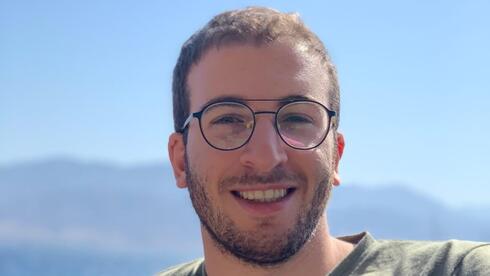
Ofek Itach, Security Research Team Lead at Cyera, details the discovery of critical vulnerabilities in widely adopted open-source LLM tools as part of CTech’s Security Researchers series.
“Assumptions can be broken, and once you start looking for them, you find bugs,” says Ofek Itach, Security Research Team Lead at Cyera. While working closely with protocols during his military service, Itach recalls, "I started to see how things actually worked under the hood, the assumptions developers make over time, and that was the realization that pulled me towards research."
Within Israel’s cyber companies are small, highly specialized teams trained to think like attackers, find vulnerabilities and stay ahead of a threat landscape increasingly accelerated by AI. In this series, we meet the individuals and teams who make up this frontline of cyber: the digital fighters.
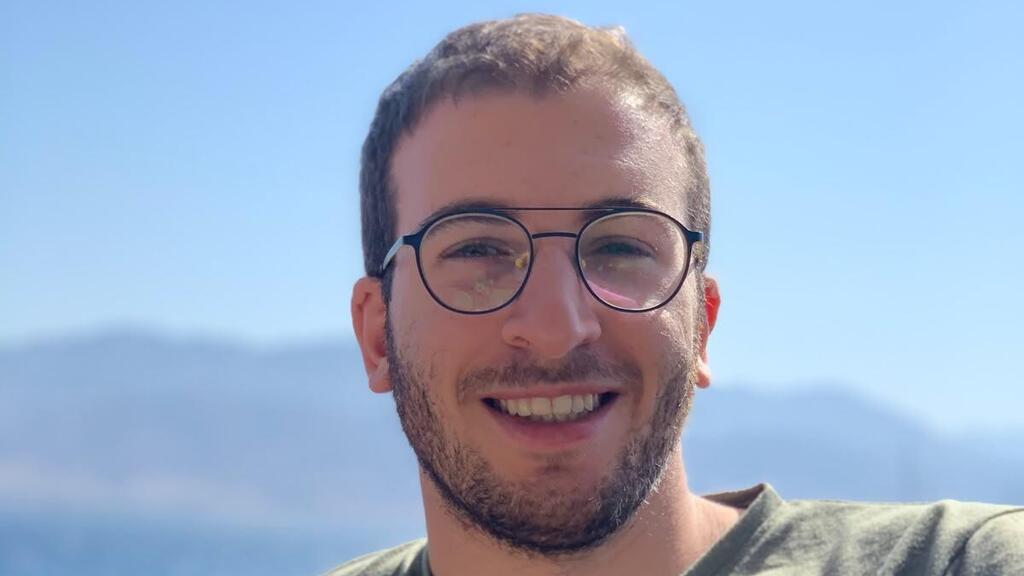
Reflecting on the competitive landscape of the security research field, Itach admits that there is a certain level of envy. “Sometimes I see what another team found and wish we'd been the ones to find it,” he shares, adding, “there have been times when someone published just before us, which stings.” However, he affirms, “At the end of the day, we're all doing something good for the world.”
You can read the entire interview below.
ID Card
Company name: Cyera
Founders: Yotam Segev (CEO), Tamar Bar-Ilan (CTO), Yonatan Itai (VP R&D)
Year of founding: 2021
Current number of employees: 1,500
Company Description:
Cyera is an AI security platform that provides the trust layer for enterprise AI transformation. Global enterprises use Cyera to control AI data access and manage subsequent actions.
About Cyera's Security Research Team:
The team consists of eight security researchers divided into three domains:
AI Security - We research how AI agents and models access data. Our findings inform product coverage of AI risks and contribute to published trends on AI security.
Data security - A force multiplier in Cyera's core business, focused on what the data is, where it is located, who can access it, and who has accessed it. This research directly informs product capabilities.
Vulnerability research - Offensive research aimed at finding and closing critical gaps in AI, Data, and Identity infrastructure. Our findings are published and guide the product on what to target next.
What is your background in cyber, and what led you to specialize in security research?
My background started on the defensive side; I was analyzing network protocols and their metadata to hunt for anomalies. Working closely with protocols during my military service, I started to see how things actually worked under the hood, the assumptions developers make over time, and that was the realization that pulled me towards research. Assumptions can be broken, and once you start looking for them, you find bugs. That's what led me to focus on security research and it's the same instinct that drives the way I work today: finding where people place their trust in a system, and the exact point where that trust breaks down.
What does your security research team look like in action?
The three domains work differently, but they share a mindset. In vulnerability research, it starts with defining the attack surface of a field and its weak points, then diving into them to deliver full execution chains. Data security research is based on hypotheses about the state of data across cloud and on-premises environments. And AI security spans the whole range, from designing the security of an AI system to customer-led insights.
In Cyera's research, we always looked into access patterns specifically in cloud environments. In the past three years, since the rise of AI, non-human identities have taken up a larger share of this story, so Cyera’s recent acquisition of Oasis Security can be a major accelerator for our research outcomes.
Lately, AI has become a real part of how we work. We use it to scan code with naive text filters, then reduce the false-positive rate with AI, and turn what's left into leads worth a human's attention. The AI drastically reduces the time it takes to find bugs; however, it still comes down to reading the code ourselves.
As for what we choose to investigate, we focus on what people rely on most right now. The tools and technologies everyone understands are powerful but are quietly becoming too powerful. Coding agents like Claude Cowork and Codex are good examples. That is where trust concentrates fastest and where the gap between a tool's power and its security tends to be widest.
How does the research team influence your company at large?
We see ourselves as part of the company's secret sauce. Our insights become products, our predictions become proofs of concept, and we consistently deliver unique, out-of-the-box value across deals and new product development.
But there's a bigger role we play: helping the industry understand that vulnerabilities are just the first chapter. What we see every day across customers, environments, and partners gives us a front-row view of where this is heading before anyone else does.
What has been your team’s most significant security discovery to date?
Our most significant discovery to date was a critical vulnerability in Ollama – a widely adopted tool that lets you run LLMs in-house. The flaw was an unauthenticated remote memory read, an attacker with no credentials at all could reach the server and read raw memory, leaking whatever was in it: conversations, prompts, and even secrets like passwords and tokens.
As for how we found it, it was a mix of the old and the new. We used AI to hunt through the code for candidates, but the actual find came down to sitting with the code and reading it like in the old days. The tool was open source, which let us go all the way down.
Who or what is your 'Moby Dick'?
Our Moby Dick is the trust problem inside coding agents – a recurring issue we’ve seen in the industry this year. To be useful, a coding agent gets handed the keys to your machine: full permissions to read, write, and run whatever it needs. We treat it like a trusted developer. But no one is really watching what happens when that same machine also holds sensitive things such as credentials, private source, customer data, and secrets sitting in the environment. Broad access is granted by design because an agent without it is worthless. It comes back to the instinct behind all our work, finding where people place their trust and the exact point where it breaks down. Right now, that point is the coding agent on your laptop.
How would you characterize the competition between research teams today?
Honestly, it's mostly a good kind of competition. Everyone knows everyone, there are many friends in this world, and that's a big part of the fun. Of course, there's envy too: sometimes I see what another team found and wish we'd been the ones to find it, and yes, there have been times when someone published just before us, which stings. But at the end of the day, we're all doing something good for the world. We're closing gaps before the bad guys exploit them. I love this community.
What is your take on the future of the human security researcher?
The nature of our work is evolving, but our roles remain essential. Right now, there's more security work than ever, not less. Everything in the tech world is moving faster, new cutting-edge technology appears every day, and people make trade-offs to keep up. Each trade-off is an opportunity for us to make a difference in the industry.
As a team lead, I see working with AI as a force multiplier. It changes how work gets done, it doesn't replace the person doing it. The researchers who'll do well are the ones who recognize that and lean into it.



