










Anthropic closes in on $7 billion Decart deal after beating Nvidia to the table
The Israeli AI startup’s founders and Sequoia favor Anthropic despite a higher reported offer from Nvidia, while Google and SpaceX remain potential alternatives.
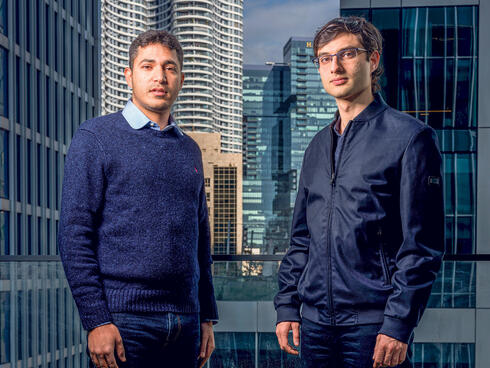
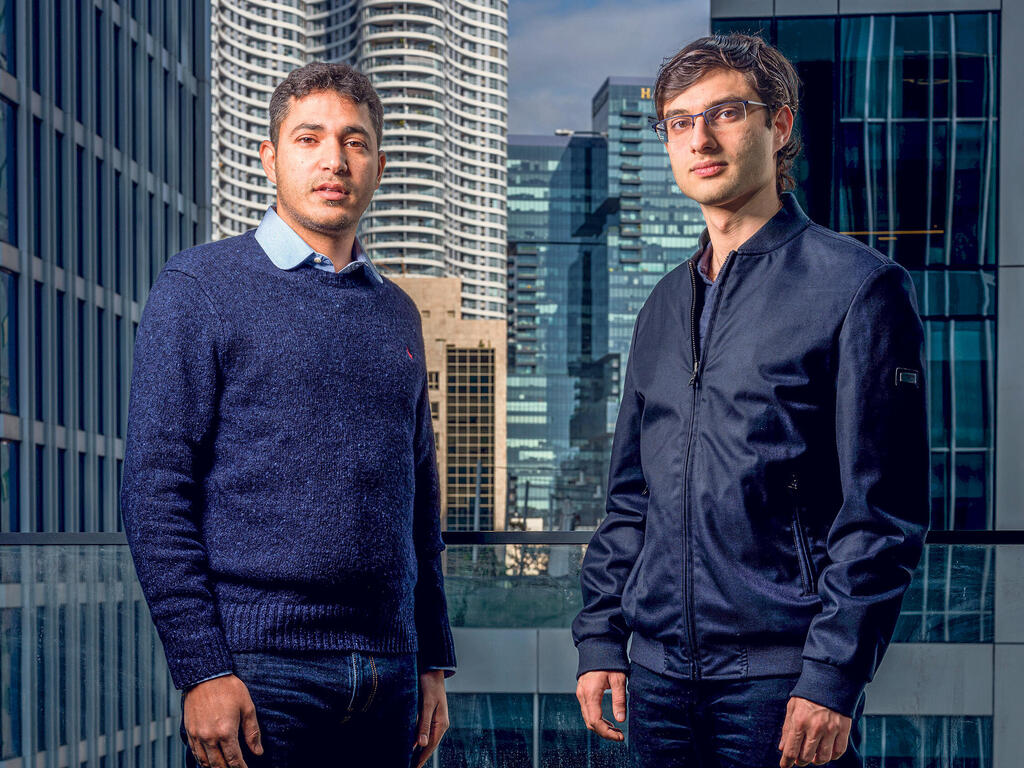
The deal under which Anthropic would acquire Israeli AI startup Decart is nearing the signing stage, with the parties now exchanging advanced drafts of the agreement, Calcalist has learned. Anthropic, the artificial intelligence company founded by former OpenAI employees, is the preferred buyer of Decart's founders, Dr. Dean Leitersdorf and Moshe Shalev. The founders and Sequoia Capital, Decart's largest investor, believe Anthropic is best positioned to take the company into its next stage of growth.
Decart is expected to be valued at approximately $7 billion in the deal, with most of the consideration expected to be paid in Anthropic shares to Decart's shareholders.
The timing is significant for Anthropic, which is preparing for a potential Nasdaq IPO. The company has already submitted a confidential prospectus, but publication of the filing has been delayed. The acquisition of Decart may have contributed to that delay.
Founded in 2023, Decart employs approximately 100 people and has raised $450 million to date.
Calcalist has also learned that advanced negotiations between Decart and Nvidia were halted after Anthropic emerged with its offer. Nvidia is believed to have offered a higher valuation than Anthropic, partly because it was already an investor in Decart.
But the identity of the buyer mattered to Decart's shareholders. Anthropic currently has no development center in Israel, and an acquisition would effectively give the company an entry point into the country's AI ecosystem.
Decart had received approaches from several other potential buyers in recent months. It initially chose to advance discussions with Nvidia, but halted that process after receiving Anthropic's offer and is now seeking to complete a transaction with Anthropic.
Decart has hired boutique investment bank Catalyst to advise on the transaction, which could be signed as soon as next month, ahead of Anthropic's expected September IPO. The company is being advised by J.P. Morgan, Morgan Stanley and Goldman Sachs in connection with its planned offering.
Despite the advanced stage of the negotiations, sources close to the deal stressed that no agreement has yet been signed. The disclosure last week that Decart was exploring a sale may also have prompted other potential buyers to examine the opportunity.
One of them is Google, which last year agreed to acquire Israeli cybersecurity company Wiz for $32 billion and is one of the world's three largest AI players. Elon Musk's SpaceX, which has previously considered acquiring Decart, could also return to the process.
Even so, the chances of Anthropic completing a deal by early September are considered high.
Anthropic's own growth has made the timing particularly significant. Bloomberg reported at the end of the week that presentations to investors showed the company's second-quarter revenue had jumped 14-fold to $11.5 billion, from $787 million in the same quarter of 2025. The company also reached positive EBITDA for the first time.
Anthropic has strengthened its position in the race for leadership in artificial intelligence against OpenAI. Its annualized revenue is estimated at $47 billion, compared with approximately $40 billion for OpenAI.
For Decart, a sale to Anthropic would represent the culmination of a remarkably rapid rise.
The company was founded just three years ago with a mission articulated by Leitersdorf to put Israel on the map in artificial intelligence. An acquisition by Anthropic would make Decart the foundation for establishing the company's development center in Israel, potentially placing Anthropic's name alongside Decart's offices in the tower on Yitzhak Sadeh Street in Tel Aviv.
The significance for Israel's technology industry would extend beyond the size of the transaction.
Israel has not traditionally been regarded as a major player in the development of large language models, which underpin much of the current AI revolution. After the decline of AI21 Labs, founded by Amnon Shashua, hopes that Israel could produce a major global player in the core AI race appeared to have faded.
Decart changed that perception.
Registered on September 7, 2023, roughly a month before the outbreak of the war, the company quickly became a fixture on lists of promising AI startups. It ranked first on Calcalist's list of promising Israeli startups for 2025. What remained unclear was how quickly the company could turn its technological promise into a large, sustainable business.
The competition for Decart in recent weeks, involving major names including Nvidia and Elon Musk, offers an indication of how strategically relevant its technology has become.
Decart's timing is also important. The AI industry is moving from an era dominated by the training of increasingly large models toward greater emphasis on inference, in which those models are actually used. That shift makes the efficiency of computing increasingly important.
Decart's technology is designed to extract more performance from AI chips, potentially reducing the amount of computing power required to run AI models. That matters as the cost of computing continues to rise alongside the rapid adoption of products such as Anthropic's Claude, Google's Gemini and OpenAI's ChatGPT.
The coming transition toward inference is expected to bring AI companies closer to profitable commercial applications, but it also threatens to increase their computing requirements. The scale of the challenge was underscored this week by the $500 billion financing agreement involving Nvidia and major Wall Street investment firms, including Blackstone and Apollo.
Against that backdrop, Anthropic's interest in Decart has implications beyond the startup itself. Establishing a meaningful presence in Israel could encourage other global AI companies to deepen their activity in the country, while potentially prompting existing players such as Google, Amazon and Meta to expand their Israeli operations.
There are precedents for this kind of effect. Intel's acquisition of Mobileye helped put Israel's automotive and mobility technology sector on the global map, while Nvidia's acquisition of Mellanox turned the Israeli networking company into a strategic part of the chipmaker just as the AI boom was beginning to accelerate.
For Anthropic, meanwhile, the acquisition would be its largest to date and would come at a particularly sensitive moment.
The company is preparing for what could become one of the largest technology IPOs ever. Its prospectus has been filed confidentially, and a public offering is expected in September or October, according to a Wall Street Journal report last week. The market is already discussing a potential valuation of $2 trillion, following private-market transactions that recently valued Anthropic at approximately $1 trillion.
Acquiring Decart while preparing its prospectus would therefore be an unusually consequential move. It would demonstrate that Anthropic is willing to make a major strategic investment immediately before entering the public markets, while also preventing a rival from acquiring technology that could improve the economics of AI inference.
That helps explain why Anthropic may have been willing to pursue Decart even against a higher offer from Nvidia.
So what makes Decart so valuable?
Beyond the concentration of talent led by Leitersdorf, who completed his doctorate in computer science at 23, the company has demonstrated technology that can improve the performance of GPUs as well as competing chips developed by Google and Amazon. Industry estimates suggest that its technology can allow AI models to run up to eight times faster than average.
For AI companies facing enormous computing bills, that could have a direct economic impact.
The fact that Decart's technology is not tied to a single chipmaker also increases its potential value to Anthropic. Rather than being dependent on one type of hardware, the technology can operate across different computing architectures.
Decart has another potentially important capability in real-time video generation. The company initially developed the technology for gaming but has increasingly focused on its potential applications in physical AI, particularly robotics. Generating high-quality video in real time and at relatively low cost could help train robots to perform physical tasks.
For Decart's founders and investors, the proposed sale nevertheless represents a complicated outcome.
The expected $7 billion valuation would be roughly 50% above the $4 billion valuation at which the company raised its latest funding round only a few months ago. That is a substantial return in a very short period, but it is not the kind of multiple that would normally be associated with the sale of a company touted as a potential new Israeli technology giant.
Leitersdorf himself has spoken of ambitions far beyond a quick exit. In an interview with Calcalist, he said he wanted Decart to become "the Google or Apple of AI."
But Decart's business was still evolving. After three years, the company did not have a single clearly defined mass-market product or a sustainable business model. It generated revenue through projects, but had yet to demonstrate the kind of recurring commercial engine that could support its ambitions as an independent company.
Under those circumstances, Anthropic may offer something that is more valuable than a higher headline price.
It offers Decart a strategic home inside one of the world's most important AI companies, while giving its technology access to a business whose computing needs are growing at extraordinary speed. Leitersdorf, still under 30, could also emerge as an important figure inside Anthropic.
For Israel, the significance may be greater still.
The country already has a large concentration of AI talent, a substantial number of AI startups and strong demand from investors for Israeli companies in the sector. But it has lacked a major global AI model company that could serve as an anchor for the industry.
An Anthropic development center built around Decart would fill part of that gap.
The deal would therefore be more than another large Israeli technology exit. It would mark the arrival of one of the world's leading AI companies in Israel at precisely the moment when the industry's center of gravity is shifting from building ever-larger models toward making those models faster, cheaper and more useful.
If Anthropic completes the acquisition, Decart may not become the independent AI giant its founders once envisioned.
But it could become something arguably more consequential for Israel's technology industry: the foundation on which one of the world's leading AI companies builds its Israeli presence.



