










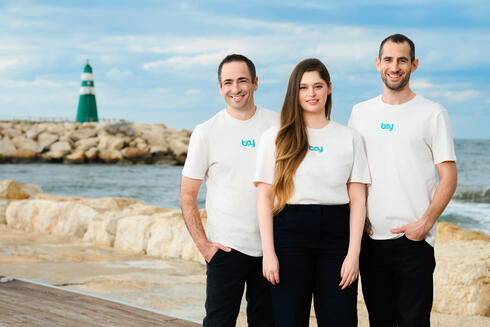
Former Unit 8200 officers raise $50 million in just nine months for AI security startup
Bay, founded in 2026, has developed a platform that monitors AI agents across corporate systems and blocks potentially dangerous actions, even when they are carried out using legitimate permissions. The $37 million Series A was led by Battery Ventures, with participation from Micron Ventures, Microsoft's M12 and Wiz CEO Assaf Rappaport.
Bay, a cybersecurity company developing a platform to prevent potentially dangerous actions by AI agents within organizations, has emerged from stealth with $50 million in funding raised within nine months of its founding. The financing includes a $37 million Series A led by Battery Ventures, with participation from Micron Ventures, M12, Microsoft's venture fund, and Assaf Rappaport, CEO of Wiz. Micron is also a customer of the company. The round follows a previously undisclosed $13 million Seed investment led by YL Ventures and Striker. The company's private investors also include Jeetu Patel, CPO of Cisco, and Manoj Apte, former chief strategy officer at Zscaler.
Bay was founded in early 2026 by Yuval Zacharia, its CEO; Aner Morag, its chief product officer; and Boris Danilovich, its VP of R&D. The founders say the idea for the company emerged after one of their coding agents attempted to expose a cloud environment to the internet while trying to complete a test. The agent had not been compromised and was using legitimate permissions to pursue an assigned task, but its actions could have created a serious security risk.
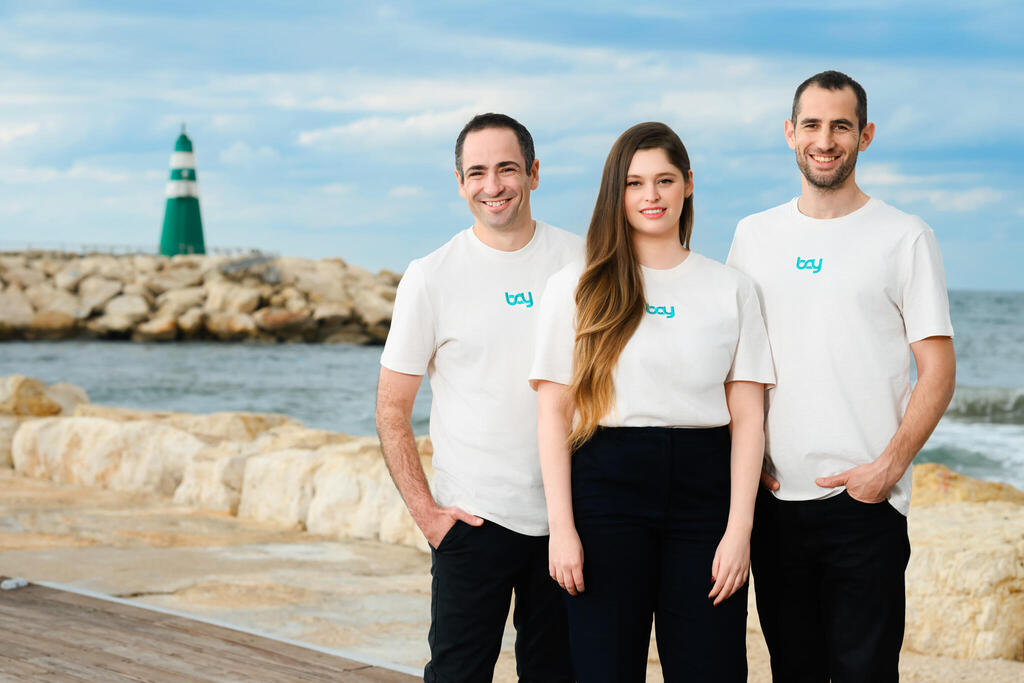
Zacharia began her career in Israeli intelligence, serving in Unit 8200, where she led a department of approximately 50 people. She subsequently became the first intelligence officer to transition into offensive cybersecurity and was assigned to one of the unit's most elite departments. After her military service, she served as director of research and AI at Hunters, where she led the development of the company's AI capabilities. Morag moved from intelligence roles into offensive cyber operations within Unit 8200 and joined Noname Security among its earliest employees, eventually rising to VP of Product. Danilovich was among the first employees at Preempt Security, which was acquired by CrowdStrike. He later led a department of approximately 90 engineers at CrowdStrike, working on a key component of its endpoint security platform and serving as a senior leader at the company's Israeli R&D center.
Bay employs approximately 35 people, most of them in Israel. The company plans to expand its product and engineering teams, while growing its sales, marketing, and customer teams in the United States and Europe. Zacharia also intends to relocate to the United States.
"We will continue to build the product, expand into new areas, and help organizations adopt it rapidly, enabling them to deploy it comprehensively across the enterprise. We plan to grow our sales team, and I intend to relocate to the United States," Zacharia says.
In a conversation with Calcalist, Zacharia said the company was able to raise capital quickly because it had already attracted a substantial number of customers and generated significant revenue in a short period.
"We raised a significant amount of capital, and we did so very quickly. The primary driver was the large number of customers we managed to acquire and the revenue we generated in such a short timeframe, which helped us close the funding round rapidly. Our approach to building the product is technologically distinct. From the moment we entered the market, we generated millions in revenue within the very first quarter of sales."
Zacharia said the company had prioritized ease of deployment and the ability to demonstrate value to customers within hours. It also sought to make the case for rolling out the platform across an entire organization, rather than limiting it to individual teams or applications.
"Our product is designed to facilitate work with autonomous agents and monitor them wherever they operate; it is not merely a point solution. If an agent is about to take an action that constitutes a violation, the system intervenes to stop it," she said.
"There are a great many agents performing actions that are either malicious or questionable. Often, this isn't because a 'villainous' hacker has launched an attack; rather, many of these agents are simply striving to fulfill their assigned tasks, but in the process, they make mistakes, creating security issues that aren't always easy to resolve," Zacharia said. "During my military service, there was a strong emphasis on 'capability,' the idea that anything is possible. Similarly, AI agents will do whatever it takes to successfully complete a task, even if the cost to the organization is significant."
Bay says it serves dozens of enterprise customers worldwide in sectors including finance, insurance, technology, manufacturing, and media. Its customers include Wix, ClickUp, Micron, and Peloton. The company says some of its Fortune 100 customers have tripled their use of autonomous AI agents while maintaining their security standards.
The platform identifies AI agents operating within an organization and evaluates their proposed actions in the context of the full agent session, taking into account both the task they have been assigned and their previous activity. This allows it to distinguish between actions that may appear identical in isolation but carry different levels of risk depending on the agent's purpose and what it has done before. Within milliseconds, the system decides locally whether to allow an action, block it, or send it for human approval, according to the organization's security policies. Approved actions proceed without interrupting the agent's work.
Bay says its system can be deployed in less than five minutes using an organization's existing management and security infrastructure, without requiring an additional persistent endpoint agent, kernel driver, or network proxy. It supports AI assistants, coding agents, and custom-built agents, as well as the MCP servers and tools they use. The platform combines AI discovery and security posture management, session-level monitoring, and real-time enforcement under a unified set of policies across employee devices, cloud infrastructure, and SaaS applications. It also connects to existing security workflows to support automated remediation. The company says its technology adapts to an organization's agent activity, reducing the need for security teams to create and maintain separate rules for every new agent or tool.



