










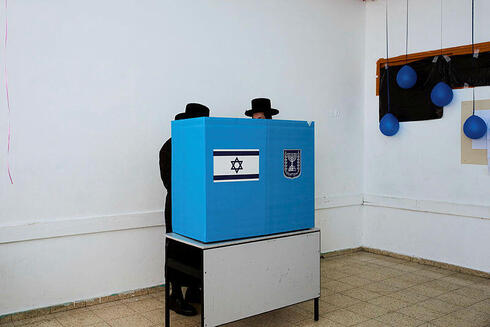
With 100% counted, Israel’s election leaves parliament deadlocked
Netanyahu’s bloc is set to win 53 seats, compared with 48 for the bloc led by Gadi Eisenkot.
With 100% of votes counted, Prime Minister Benjamin Netanyahu’s bloc is set to win 53 seats in the Knesset, leaving it short of a parliamentary majority, according to figures released Thursday by Israel’s Central Elections Committee. The opposition bloc led by Gadi Eisenkot is set to win 48 seats, while the two Arab parties are set to secure a combined 19 seats.
The latest figures show no change in the balance between the main parliamentary blocs. Netanyahu’s Likud remains the largest party with 27 seats, followed by Eisenkot’s Yashar with 21 and Beyachad with 12.
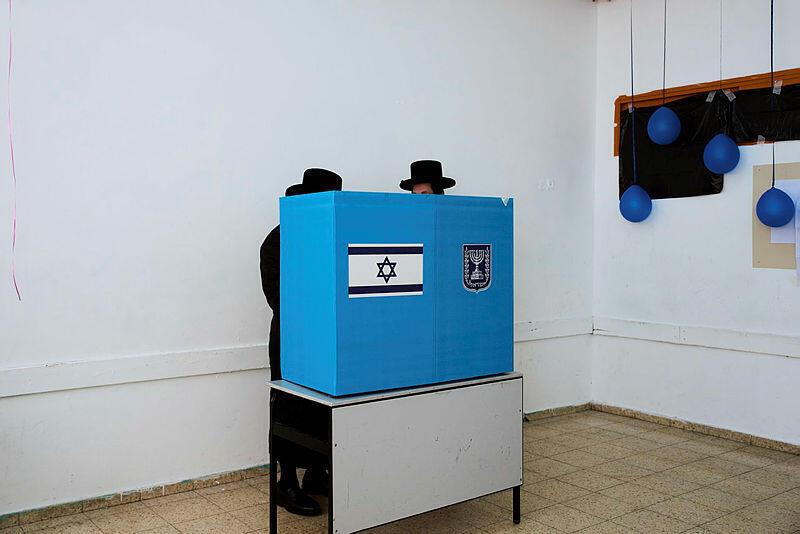
The Joint List is projected to win 11 seats, while the Arab-led Ra’am party and the Democrats are each projected to receive eight. United Torah Judaism, Yisrael Beiteinu and Otzma Yehudit are each on seven seats. Shas and the joint Religious Zionism-Zehut list are each projected to win six.
Earlier Thursday, the Central Elections Committee announced that the count of special double-envelope ballots had been completed. These ballots are used by soldiers and others voting away from their designated polling stations.
The committee stressed that the figures remain provisional. Official results are scheduled to be published on Wednesday, November 4, following an additional review of election integrity.
Step by step: What happens after Election Day?
The first step is the official publication of the election results by the Central Elections Committee in Reshumot, Israel's official gazette. Under the law, the committee has eight days from Election Day to publish the results, making Wednesday, November 4, the final deadline.
The 26th Knesset is scheduled to be sworn in on Tuesday, November 10, exactly two weeks after the October 27 election. But the race to form a government will begin before the new parliament formally convenes.
Once the Central Elections Committee submits the official results to President Herzog, he will summon representatives of the parties elected to the Knesset to the President's Residence. Each party will recommend the lawmaker it believes should be tasked with forming the next government.
Herzog is expected to begin consultations on Wednesday, November 4. The meetings are expected to continue Thursday and could extend into Friday.
Under Israeli law, the president has seven days from the publication of the official election results to complete consultations and assign the task of forming a government. If the results are published on November 4, that gives him until November 11, although he may make his decision earlier.
The president generally gives the mandate to the lawmaker he believes has the strongest chance of assembling a governing coalition. In most cases, that is the candidate who receives the largest number of recommendations from parliamentary factions.
The first attempt: 28 days, with a possible extension
The first lawmaker entrusted with forming a government has 28 days to complete coalition negotiations and present a government.
The president may grant additional time, but extensions cannot exceed 14 days in total, giving the candidate a maximum of 42 days.
If the candidate fails, Herzog has two options. He can assign the task to another member of Knesset, potentially the leader of the opposing political bloc, or inform the Knesset speaker that he sees no prospect of forming a government.
A second candidate would receive 28 days to form a coalition, without the possibility of an extension.
The last chance: 61 signatures in 21 days
If the president concludes that no candidate can form a government, or if the second candidate also fails, a final parliamentary mechanism comes into play.
A 21-day period opens during which at least 61 of the Knesset's 120 lawmakers can submit a written request asking the president to assign the task to a specific member of Knesset who has agreed to accept it.
If the required majority of lawmakers signs such a request, the designated candidate receives 14 days to form a government.
If that effort also fails, or no candidate secures the necessary 61 signatures within the allotted period, the Knesset is automatically dissolved and Israel heads to another election.
For now, the election may be over, but the political contest is far from settled. The coming weeks will determine whether the parties can negotiate a coalition capable of securing the Knesset's confidence or whether Israelis will once again be asked to return to the ballot box.
Ynet contributed to this report.



