










Buildots raises $130 million at nearly $1 billion valuation as AI boom drives data center construction
The Israeli construction software company has more than quadrupled its valuation from its previous funding round and now has over 400 employees. Its AI system is increasingly being used on massive data center projects, where delays can carry particularly high financial costs.
A massive funding round for Buildots has pushed its valuation to an estimated $1 billion. The construction-sector software company, which ranked third on Calcalist’s list of promising startups for 2025, raised $130 million, marking a significant increase from the approximately $300 million valuation at which it completed its previous $45 million round a year and a half ago.
Despite the size of the round, it was entirely a primary capital raise, with no secondary transactions, and was conducted entirely through equity rather than debt. The round was led by O.G. Venture Partners, founded by Israeli businessman Eyal Ofer, with participation from Lightspeed, Intel Capital, Mohari Ventures, Human Capital, Israeli funds Qumra Capital, Viola Growth and Poalim Equity, and investor Avigdor Willenz. The company's investor base also includes TLV Partners, Future Energy Ventures, Maor Investments and Tidhar.
Following the round, Buildots’ total capital raised since its founding has reached $297 million. The company says it continues to triple its revenue year over year.
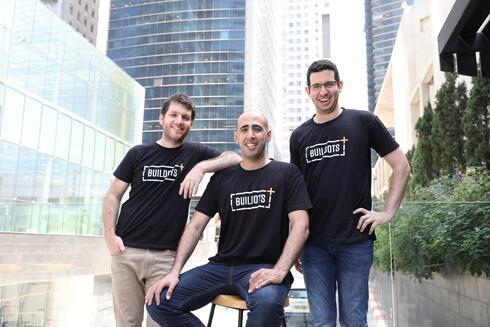
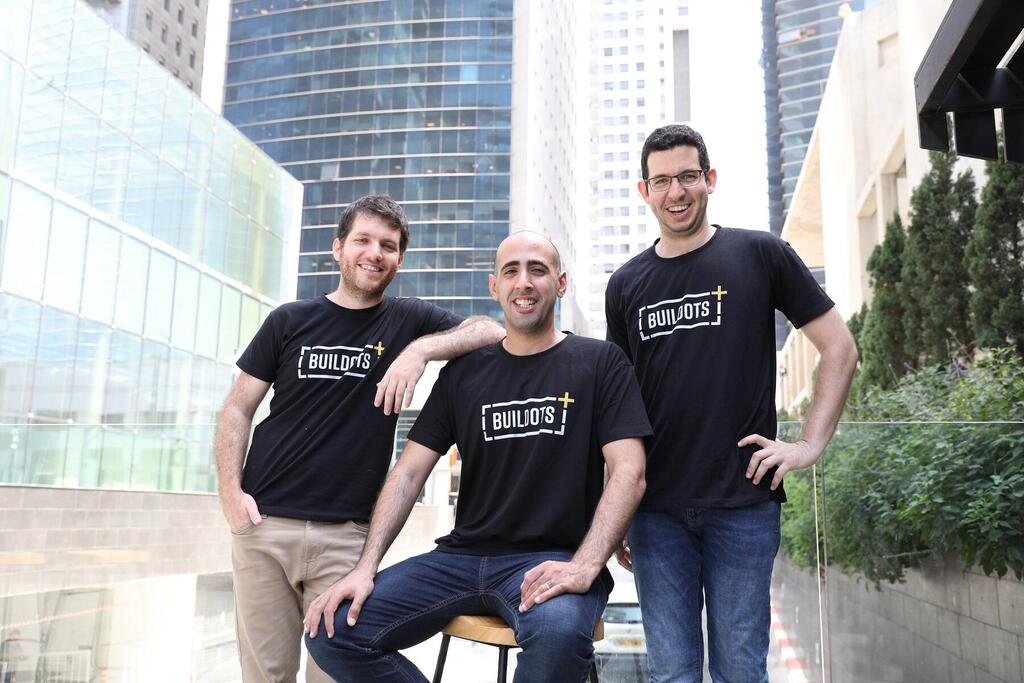
Buildots was founded in 2018 by three graduates of Israel’s Talpiot program: Roy Danon (CEO), Yakir Sudry (CTO), and Aviv Leibovici (CPO). Danon is the brother of Or Danon, a co-founder of chip startup Hailo and also a Talpiot graduate.
The company now employs more than 400 people, including 260 in Israel and around 100 in the U.S., with the remainder spread across several European countries.
Buildots has developed what amounts to a command-and-control system for construction projects, designed to help construction companies manage work more precisely and address one of the industry’s chronic problems: delays and late handovers.
Its system relies on a 360-degree camera, similar to a GoPro, mounted on a construction site manager’s helmet. During site visits, typically several times a week, the camera captures and transmits data on the project’s physical progress. The system then analyzes the information and generates alerts when work is falling behind schedule, while also recommending ways to accelerate construction and stay on track.
The alerts can cover a wide range of tasks, from drywall installation to drilling openings for electrical sockets. The goal is to identify potential bottlenecks before they develop into delays.
Buildots says its technology has reduced delays by 50% and saved an average of three months on project schedules. Data collected from the physical construction site is fed into an AI system that creates a unified view of project status for all stakeholders, including developers, general contractors and subcontractors.
The system is used in both residential and commercial construction, including hospitals and student housing. But the company has received a major boost from the surge in data center construction driven by the AI boom.
Data centers have become a bottleneck for many technology companies, and the ability to build them quickly has emerged as an increasingly important factor in the competition among cloud and AI companies.
“Two years ago, we began to see the first signs of the data center boom, but since then, we have received a significant backlog of orders from major companies in the U.S. and Europe. We found ourselves at a critical juncture, and we have been growing remarkably ever since. Buildots tripled its revenue last year and will grow at the same pace this year,” Danon said in an interview with Calcalist, while declining to disclose the company’s revenue.
“We have become one of the few companies in this field globally, which is why we are working on most of the data centers making headlines in the U.S.,” he added.
Buildots’ clients include Digital Realty, a data center operator that, among other activities, builds server facilities for Nvidia and has a market capitalization of around $70 billion. Other customers include Intel, STO Building Group, JE Dunn, Mortenson, Bouygues and HOCHTIEF, as well as Israeli construction companies Tidhar, Ashtrom, Azrieli and Mivne.
The wave of investment in AI infrastructure has made efficient construction more urgent. Projects are becoming more complex, schedules are tightening and the financial consequences of delays are increasing.
That shift is reflected in the scale of Buildots’ contracts. The company is increasingly signing multi-million-dollar deals and seeing customers move from using its system on individual projects to multi-year agreements covering large portfolios and massive construction projects.
“The challenges we solve in data center construction also exist in projects involving office buildings, residential towers, schools and hospitals. Often, it is discovered too late that the project is deviating from the plan,” Danon said. “In data centers, due to their size, complexity and the scale of investment, any such deviation results in massive losses.”
“Buildots is doing for the construction industry what Mobileye once did for the transportation sector,” said Ziv Kop, managing partner at O.G. Venture Partners. “Buildots’ unique models and its ability to gather data from the field are bringing the AI revolution to both traditional construction and the tech-driven construction sector, which today encompasses data centers, chip manufacturing plants and defense-tech facilities.”
“We have been investing for over two decades in companies that create new categories, and the most successful ones are those that build a technological infrastructure upon which the entire industry begins to operate,” he added.



