










“52% of organizations already using generative AI have implemented AI agents in their day-to-day operations”
Speaking at Google and Calcalist's AI Week, Elit Ben Basat Nuriel, Head of Cloud Marketing at Google Israel, added that "we are at the most dramatic turning point since generative artificial intelligence entered our lives."
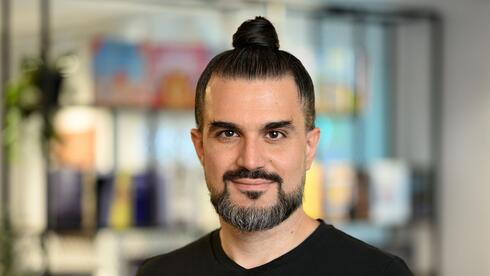
"We are at the most dramatic turning point since generative artificial intelligence entered our lives." That's how Elit Ben Basat Nuriel, Head of Cloud Marketing at Google Israel, describes the rise of AI agents, autonomous systems that are beginning to move beyond chatbots and take over entire business processes.
"In a global survey we conducted among 3,500 senior executives, we found that 52% of organizations already using generative AI have implemented AI agents in their day-to-day operations,” Ben Basat Nuriel said as part of Google and Calcalist's AI Week.

"We divide organizational maturity into three levels. The first and simplest is the chatbot, which retrieves information and performs basic actions. The second consists of dedicated AI-agent applications, such as service agents or creative agents. The third and most advanced level, which some organizations have already implemented, is multi-agent workflows, multiple AI agents that communicate with one another and manage entire processes from end to end.
"In the surveys and studies we have conducted, organizations that clearly defined the business problem they wanted an agent to solve are already seeing a positive return on investment. This can be in customer service and experience, sales and marketing, cybersecurity, or technical support. If salespeople once spent three hours preparing for a customer meeting, today a smart agent can interface with the organization's applications and create a customized presentation in five minutes. In cybersecurity, where attackers increasingly use AI, defense teams must be able to operate at machine speed."
Can you give three tips for organizations taking their first steps in implementing AI agents?
"The first tip is that management must define the business need, understand the technology, determine the expected ROI, and allocate dedicated budgets. It is also critical to ensure strong security so that AI agents can securely connect to enterprise systems while protecting corporate data.
"The second tip is to start with repetitive, time-consuming processes that consume employees' time. Don't try to build a complete architecture on day one. Creating an agent that delivers immediate results generates a powerful 'wow' effect and helps drive adoption.
"The third tip is data governance and security. For an AI agent to be truly useful, it must have secure and controlled access to core systems. Organizations should first put their data house in order, establish a strong security framework, and adopt a zero-trust approach. That creates the foundation for innovation with confidence."
What will the world of work look like in three years?
"I believe we will see a hybrid workforce. Managers will oversee both employees and AI agents. Organizations will operate with a combination of human talent and digital workers. Every employee will have a personal AI agent, or even a network of agents, working alongside them or on their behalf. We are already seeing the early stages of this with announcements such as Gemini Spark."
Finally, what will be the most important skill in the age of AI agents?
"The most important skill will be orchestration, the ability to define context and manage goals. People will need to excel at setting clear objectives, providing the right context, managing guardrails, and applying critical thinking.
"Human talent is not becoming less important; it is becoming more strategic. Tomorrow's workers will spend less time performing manual tasks and more time orchestrating digital systems. The future is more strategy and less hands-on execution."



