










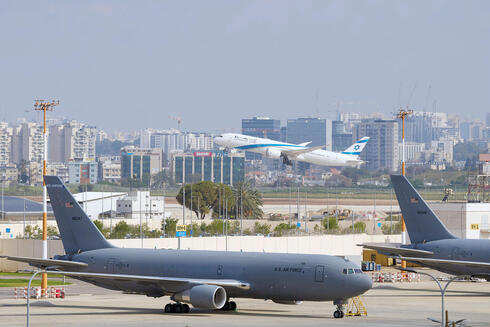
U.S. military buildup at Ben Gurion threatens new summer flight disruptions
Four tanker aircraft have already returned to Israel’s main airport, with officials warning that a larger deployment could force airlines to cut flights.
The U.S. military is refusing to continue evacuating tanker aircraft from Ben Gurion Airport and has even returned several tankers, despite previous understandings reached between Israel and the United States to clear space at the airport ahead of the summer travel season.
The dispute comes after the Israel Airports Authority warned that the presence of 74 military tankers parked at Ben Gurion Airport could disrupt civilian aviation operations during the busy summer period and potentially lead to the cancellation of millions of airline tickets.
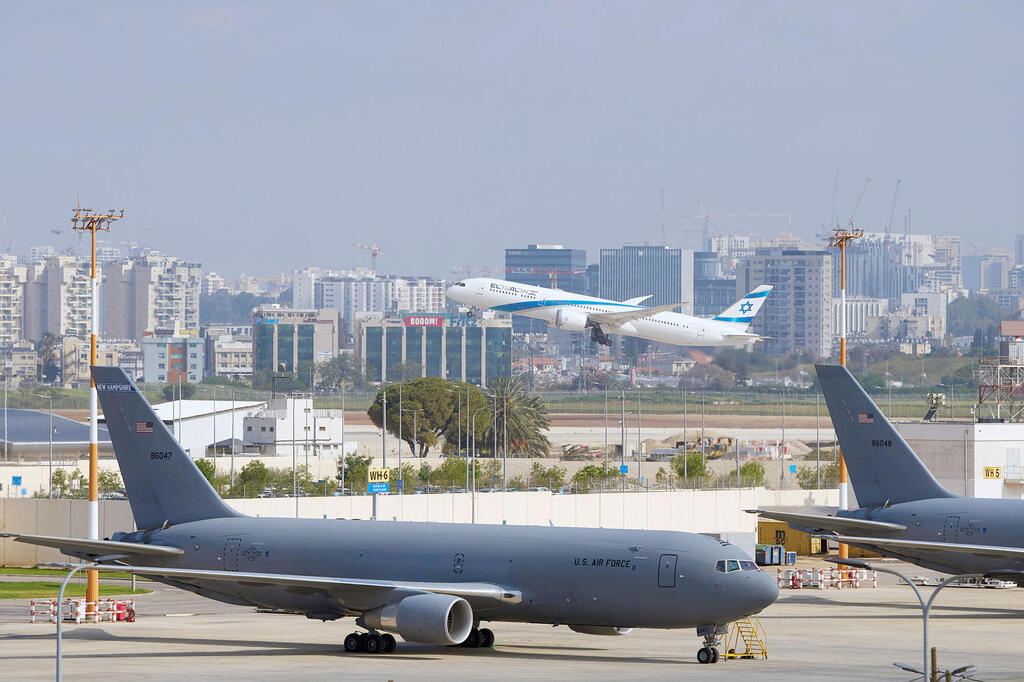
Following discussions between Israeli and U.S. officials, dozens of tanker aircraft were evacuated from the airport. By last week, only 20 tankers remained at Ben Gurion Airport, allowing regular operations to continue and easing concerns over widespread flight disruptions.
However, as first reported by Calcalist, the U.S. military is now seeking to return some of the aircraft to Ben Gurion Airport and expand its presence at Israel’s main aviation hub.
So far, four tankers have already been returned, and the U.S. military is seeking to add additional aircraft. The Israeli Air Force has warned that a significant increase in the number of tankers could result in flight cancellations on a scale that cannot yet be determined.
The Ministry of Transportation may have limited ability to prevent the move. As part of the agreement to evacuate the tankers, the ministry committed to allowing U.S. military aircraft to return to Ben Gurion Airport if operational needs required it. The renewed security tensions in the region appear to have increased that need, once again raising concerns over potential disruptions to summer flights.
Industry sources emphasize that the return of a small number of tankers is unlikely to have a significant impact on civilian aviation. A single tanker aircraft, and even the four currently back at the airport, is not expected to trigger widespread cancellations.
However, the aircraft do occupy more than one standard parking position and receive priority in certain ground and air services. If the U.S. military continues to increase the number of tankers stationed at Ben Gurion Airport, the Israel Airports Authority may be forced to reduce takeoff and landing slots available to commercial airlines. Some foreign carriers could also be required to park aircraft outside Israel, a move that could increase the likelihood of flight cancellations.



