











"Groundwater could flood hundreds of high-rise buildings in coastal cities"
Former Environmental Protection Ministry official Dr. Gil Proaktor says climate change has become a strategic threat requiring emergency planning, infrastructure investment and a faster renewable energy transition.
Dr. Gil Proaktor has watched the warnings from climate scientists move from forecasts to reality.
Across Europe, record-breaking heat waves have killed thousands of people, while extreme temperatures have been recorded across the United States, East Asia and Australia. And according to Proaktor, Israel should expect the same trend.
“The scientists’ warnings are coming true in the most serious way,” says Proaktor, a former senior official at the Ministry of Environmental Protection who led the ministry’s climate department. “In Europe, about ten thousand people died within a few weeks during historic heat waves. Extreme records are being broken around the world, and this will reach Israel as well.”
According to Proaktor, the combination of global warming and increasingly extreme weather patterns is creating risks that governments can no longer treat as theoretical.
“Climate change is getting worse and it is costing human lives,” he says. “Israel is located in a region that is warming about 20% faster than the global average. Going outside in a few years could become dangerous. Climate risks threaten critical infrastructure, national security and the economy.”
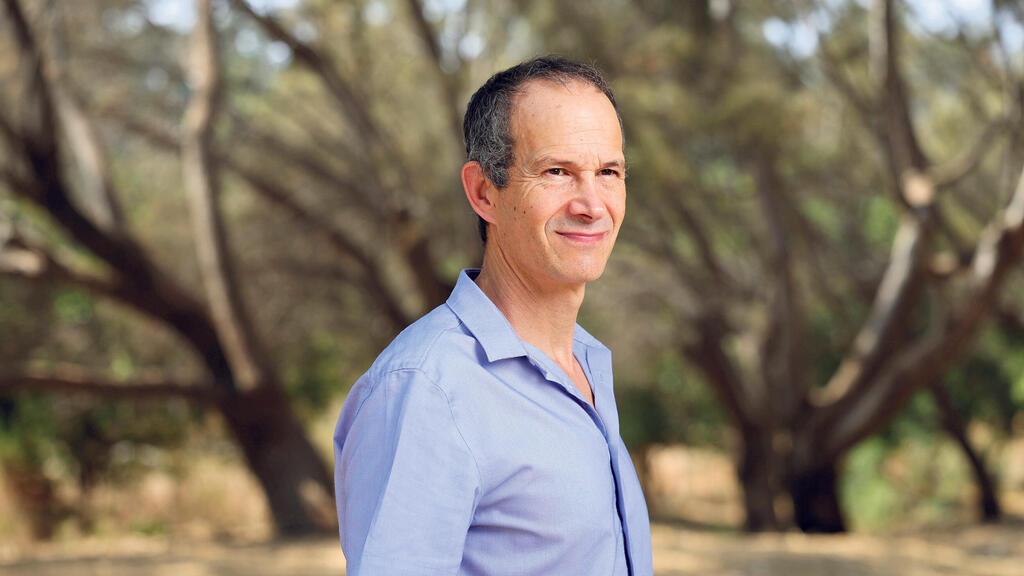
Despite years of warnings, Proaktor believes Israel remains far from ready for the climate challenges ahead.
“In the final analysis, Israel is not prepared,” he says. “There is no approved and budgeted national plan, and there is no legislation requiring government ministries to formulate plans to deal with climate risks.”
According to Proaktor, the absence of a climate law has left government ministries without a binding framework requiring them to meet targets or report progress.
“Because there is no climate legislation, the government has no clear obligation to implement plans and targets, and no accountability toward the public,” he says.
The consequences, he argues, will not be limited to environmental damage.
“Already today, extreme weather conditions are harming the ability of critical systems such as electricity, transportation and healthcare to provide the services that people depend on,” he says.
One of the biggest challenges will be adapting infrastructure built for a climate that no longer exists.
“Temperatures that are considered extreme today will become average in a few years,” Proaktor says. “With 35 degrees in the shade and much higher temperatures in direct sunlight, railway tracks soften. We will then need to slow down or limit train travel to prevent deformations that could lead to derailments.”
Without adapting infrastructure, he warns, such disruptions could become routine.
“This will happen every summer if we do not build tracks from materials adapted to these conditions.”
The electricity system is also vulnerable, he says.
“Israel’s electricity infrastructure was not designed to withstand extreme temperatures over long periods,” Proaktor says. “A continuous heat load threatens the operation of the electricity network precisely when demand is at its highest.”
He notes that gas-fired power plants already lose 10%-15% of their available production capacity during extreme heat.
“That is a huge amount of electricity that cannot be used when the system needs it most.”
The hidden threat beneath Israel’s coastal cities
Beyond heat waves, Proaktor warns of another risk that receives far less public attention: rising groundwater levels caused by sea-level rise.
“The electricity system is not built to cope with rising groundwater,” he says. “This is a risk that could materialize within five to ten years.”
As seawater penetrates further inland, saltwater can push against freshwater aquifers beneath the coastal plain, causing groundwater levels to rise.
“Water could flood parts of the foundations of infrastructure and high-rise buildings in coastal cities,” he says. “These foundations are dozens of meters deep and were never designed to be constantly exposed to water.”
According to Proaktor, the threat affects the entire coastal urban strip.
“We are talking about hundreds of high-rise buildings whose foundations could be affected. This is a serious danger that requires immediate preparation through planning, regulation, construction methods and materials.”
When asked where Israel can look for examples, Proaktor points to cities and countries that have already begun adapting.
“Look at Miami,” he says. “It is exposed to hurricanes, rising sea levels and groundwater. The city is investing billions to deal with these challenges.”
He also points to the Netherlands, where decades of investment and consistent government policy have created resilience against flooding.
“The climate issue is not even on the radar in government corridors here,” Proaktor says. “It is treated as a marginal issue. But everyone who deals with this understands that the climate crisis is a strategic threat like Israel’s security threats.”
“It affects the economy, security, health and the lives of residents.”
Proaktor says Israel’s climate programs have also suffered from chronic budget uncertainty.
“One of the fundamental problems is that these budgets are not anchored in the Ministry of Environmental Protection’s budget,” he says. “Every year there are difficult negotiations with the Finance Ministry, and there is a chronic shortage.”
According to Proaktor, climate programs are often among the first to face cuts.
“From 2021, there were government decisions with budgets of more than NIS 1 billion for climate-related programs, including energy efficiency, electric transportation, recycling and urban shading. But delays in approvals, budgeting problems and cuts prevented many of these programs from being implemented.”
He argues that Israel needs multi-year planning rather than annual negotiations.
“The Finance Ministry should budget five-year plans. Opening budgets for negotiations every year does not allow long-term programs to succeed.”
Israel has made progress in renewable energy, but Proaktor believes the pace remains insufficient.
“Today, about 18% of Israel’s electricity comes from renewable energy,” he says. “The share of electricity from coal is already lower than renewables, and coal should have been completely phased out years ago.”
But he warns that Israel’s dependence on natural gas remains a growing vulnerability.
“Israel’s economy is heavily dependent on gas, and that is problematic.”
The challenge is becoming more urgent as electricity demand rises, partly because of the rapid expansion of data centers.
“The electricity system operator estimates that demand will grow by about 5% annually in the coming years, compared with average growth of about 2.8% in recent years,” he says.
“That is a dramatic increase.”
At the same time, Proaktor warns that Israel could eventually face a gas shortage.
“If Israel currently consumes about 15 billion cubic meters of gas annually and exports around 12 billion cubic meters, we are moving toward a shortage,” he says.
Without faster progress in renewable energy and additional gas discoveries, he warns the economy could face higher prices and increased competition over limited resources.
“The economy will be forced to absorb price increases,” he says.
Proaktor argues that Israel must significantly increase its renewable energy targets.
“It is impossible to settle for 35% renewable energy by 2035 and then slowly increase from there,” he says. “We need an ambitious operational plan of at least 40% renewables by 2035 and around 55% by 2040.”
That transition, he says, must include storage, energy efficiency and smarter electricity management.
He also calls for broader use of solar infrastructure.
“Israel should incentivize solar roofs over parking lots and cemeteries. This provides clean energy, shade and infrastructure for electric vehicle charging.”
Ultimately, Proaktor says climate policy requires political leadership.
“None of this will happen without the involvement of all government ministries as part of a national emergency plan,” he says.
“When a ministerial committee on climate issues does not meet, there are no government instructions and no commitment from ministers, it is impossible to advance the issue.”
He argues that a climate law is essential.
“The Climate Law creates government commitment, an anchor and a compass for years to come. It passed committee discussions but was never approved for second and third readings. In the end, a political decision is needed.”
Despite his warnings, Proaktor says Israel also has an opportunity.
“Israel has extraordinary innovation capabilities,” he says. “We can turn the climate crisis into a growth engine and demonstrate regional leadership.”
He points to areas such as water management, agriculture and energy, where Israel has developed expertise.
“Israel has solutions that the world needs. But we must start prioritizing the risks and opportunities.”
Without action, however, he warns that the consequences could be severe.
“If global temperatures rise by an average of 2.5 degrees by 2050 and around 4 degrees by the end of the century, living conditions here will become extremely difficult.”



