










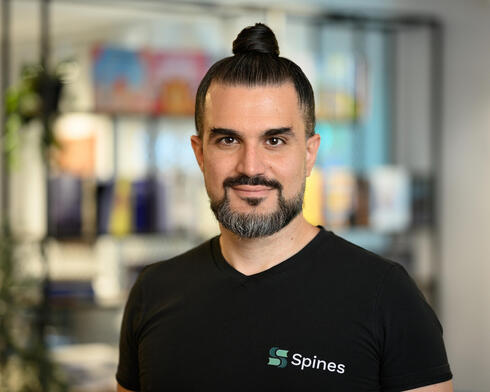
Spines raises $64 million to automate book publishing with AI
The Israeli-founded company says it has reached a $50 million annual revenue run rate, up from $5 million two years ago. Its platform uses AI agents to handle much of the publishing process, from editing and design to translation, audiobook production, distribution and marketing.
Spines, a company developing an AI-powered publishing platform for authors, has raised $64 million in a financing package that includes a $29 million Series A-1 round led by Oren Zeev’s Zeev Ventures, with participation from existing investors Aleph, NordStar, M-Fund and LionTree, as well as angel investor Dan Senor, co-author of Start-Up Nation. The company also secured a $35 million non-dilutive growth financing facility from Twelve. The financing brings the total amount raised by Spines since its founding to $86 million.
Spines was founded in 2021 by Yehuda Niv, its CEO; Lev David, CSO; Nir Kenner, CTO; and Niv Ovdat, CPO. Niv previously founded Niv Publishing in 2013, which has grown into one of Israel’s largest publishing houses, releasing more than 1,200 titles annually. His experience in the publishing industry provided the foundation for establishing Spines and developing its platform.
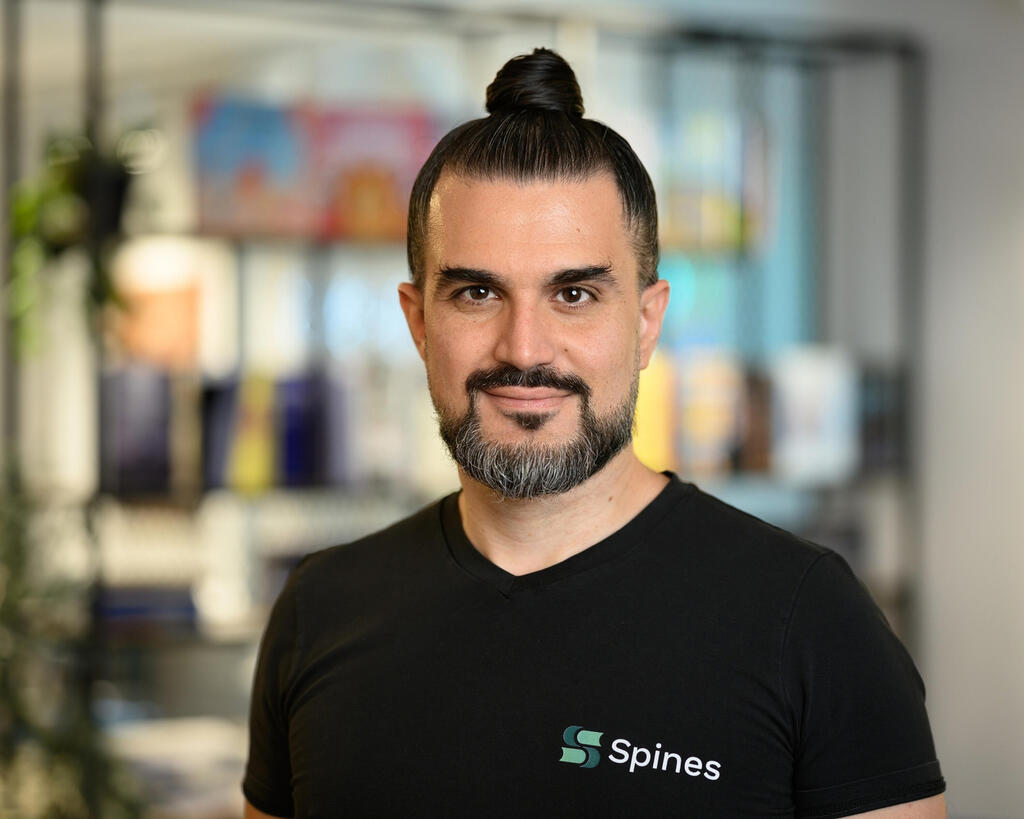
In a conversation with Calcalist, Niv said the company is growing rapidly, with an annual revenue run rate of approximately $50 million, up from $5 million just two years ago. The company says it has grown by 400% over the past year. Spines currently employs 350 people, 90 of whom are based in Israel.
“We hadn't planned to raise capital, but we received interest from various funds. Oren, who is very fond of the company, asked to lead the round alongside our existing investors. I labeled it an 'A-1' round. If I had called it a 'Series B,' implying that the next round would be a 'Series C,' it might have been misleading, as we are still a young company rather than a mature one. Furthermore, some funds are restricted from investing in later-stage companies, so the name is simply a designation,” Niv said.
Explaining the decision to combine equity and debt financing, Niv said: “It doesn't make sense to finance the company's growth solely through equity. I would rather take on debt and pay interest. For us, debt is a form of smart financial engineering.”
Niv described Spines as a leader in what he calls “native AI” publishing. “While other publishers operate in a similar way, none have reached our scale, working with 8,000 authors. That reflects a level of technological depth that is difficult to achieve. Publishing a book with minimal human intervention is a complex challenge. Many have tried, but none have succeeded. We bring 15 years of industry experience and a deep understanding of what authors truly need.”
The company has so far focused primarily on the United States and is now looking to expand into additional markets. “We are performing very well in the United States, and we now feel the time is right to expand into Latin America. We have the capability to translate books into several languages, and we are exploring ways to reach authors in South America and English-speaking countries,” Niv said.
Spines is also active in Israel. “We offer authors in Israel the opportunity to translate their books into English. Currently, about 800 of the 8,000 authors we work with are based in Israel,” Niv said.
Spines’ platform is designed to manage the entire publishing process, from the submission of a manuscript to book distribution and marketing. Authors upload their own manuscripts, after which the company's specialized AI agents assist with editing, proofreading, cover design, formatting and metadata. The platform can also produce audiobooks using synthetic voices or a model of the author's own voice, which can be used to narrate the book in other languages.
The technology also extends to children's books. Spines has developed AI illustration tools designed to maintain consistent characters throughout an entire book, allowing authors to create illustrated titles within the same publishing workflow.
Human specialists remain involved throughout the process. The company's in-house team of editors, proofreaders, designers and native-speaking language professionals can provide additional expertise and support when needed.
More than 8,000 American authors have published books through the platform, according to the company, with approximately 400 new authors joining every month. Spines says it has shortened a publishing process that traditionally takes 12 to 18 months to just a few weeks.
The platform distributes books through more than 100 channels worldwide and consolidates sales and royalty data in one place, allowing authors to track their earnings across different platforms and markets. Its marketing tools also enable authors to create, launch and manage campaigns designed to reach relevant readers and build demand for their books.
The platform currently supports translation from English into seven languages: Spanish, Italian, French, German, Portuguese, Polish and Hebrew. The translations are generated using artificial intelligence and then reviewed by professionals who are native speakers of the target language. Spines plans to expand the service to 20 languages over the next six months.
In a statement, Niv said the company's approach is based on using AI to support authors rather than replace them. “We don’t believe the future of publishing is AI writing books. We believe the future is AI giving authors superpowers. The writing, the story, and the knowledge come from the author. Our job is to build the technology and infrastructure around them; to help more people discover the author within themselves, turn their work into a professionally published book, and ultimately find and reach its audience,” he said.
Oren Zeev, founder of Zeev Ventures, said: “Spines has all the ingredients to become the category leader in the next generation of publishing. I’ve seen it first-hand; a close friend of mine published his book with Spines and had a great experience. I believe Spines can become the go-to platform for authors around the world to publish their books and reach readers.”
Michael Eisenberg, co-founder and general partner of Aleph, which led Spines' seed round and also participated in its Series A and Series A-1 rounds, said: “Spines’ growth since our seed investment has been extraordinary, and it’s clear that authors are hungry for this kind of AI-powered publishing solution. As an author myself, I know that writing the manuscript is only the first step in bringing a book into the world. Everything that comes afterward can be slow, fragmented and frustrating. What attracted me to Spines from the beginning was the opportunity to use technology to remove that friction without removing the author from the process. AI should amplify human creativity, not substitute for it, and Spines is building the infrastructure to make that possible at global scale.”



