










Israel launches $27 million quantum computing center as the industry searches for a winner
The facility will integrate at least three competing technologies and allow companies to compare platforms, develop algorithms and test commercial applications.
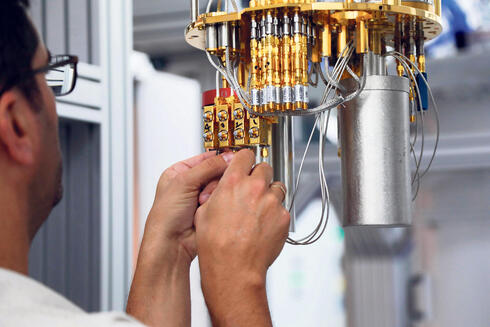
Israel is investing NIS 100 million ($32.8 million) to establish a national quantum computing research infrastructure that will allow companies and researchers to experiment with competing technologies, develop applications and build expertise in a field expected to reshape industries but whose commercial future remains uncertain.
The Israel Innovation Authority has launched a call for proposals to establish and operate the infrastructure, which is intended to become Israel’s national center for evaluating, integrating and adopting quantum computing technologies.
Rather than betting on a single quantum architecture, the initiative will require the integration of at least three different quantum processing technologies. The decision reflects one of the biggest challenges facing the industry: despite billions of dollars in global investment, no single approach has yet emerged as the clear winner.
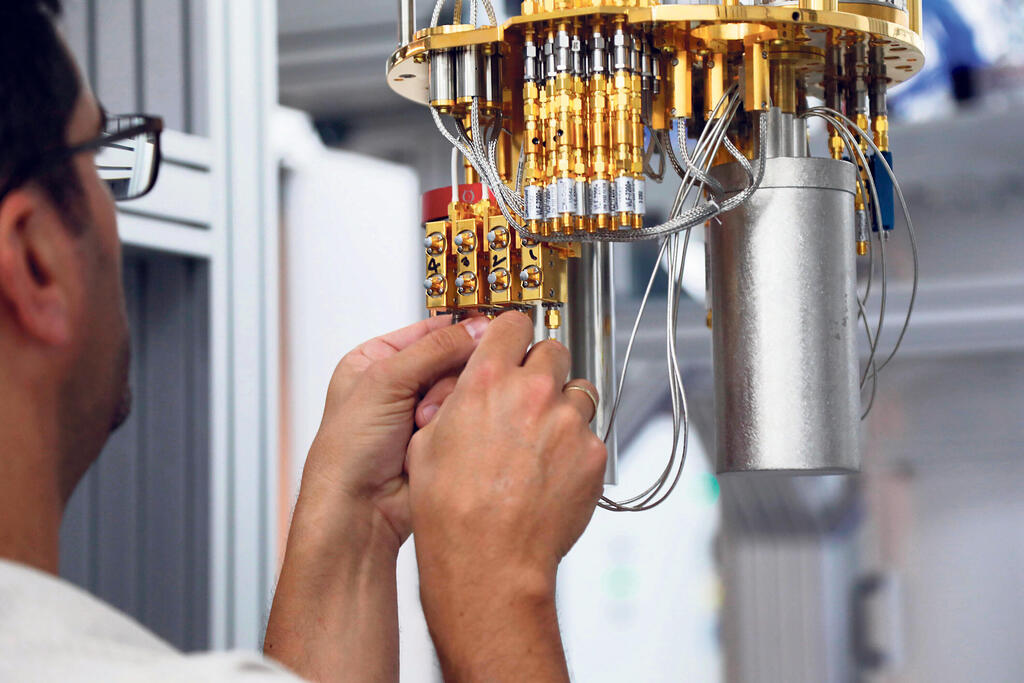
The infrastructure will allow Israeli companies and academic researchers to test different quantum platforms, compare their performance and determine which technology is best suited for specific applications, without having to independently invest in expensive and complex computing systems.
“Quantum computing is expected to fundamentally transform the way industries address highly complex computational challenges,” said Dror Bin, CEO of the Israel Innovation Authority. “Through this new call for proposals, we aim to provide Israeli industry and academia with a state-of-the-art R&D infrastructure that will enable them to evaluate, integrate and adopt quantum computing technologies.”
Quantum computing is considered one of the most promising emerging technologies because of its potential to solve certain problems that are beyond the practical capabilities of classical computers. Potential applications include drug development, materials science, logistics optimization, financial modeling and cryptography.
However, the technology remains in an early stage. Current quantum systems are still limited by technical challenges, including high error rates and difficulties maintaining stable calculations. It remains unclear when, or in which areas, quantum computers will deliver significant commercial advantages over traditional systems.
The new Israeli infrastructure will cover the entire quantum computing stack, from quantum hardware and qubits to control and measurement systems, error correction, software, algorithms and commercial applications.
Among the services it will provide are technology integration, benchmarking of different quantum platforms, development and optimization of quantum algorithms, proof-of-concept experiments and adapting quantum solutions to industry needs.
One of the main goals will be helping companies determine whether a quantum approach can provide an advantage before committing significant resources to development.
The requirement to support multiple technologies is a central feature of the program. The Innovation Authority said that different quantum computing approaches have different advantages, limitations and levels of maturity, while compatibility between systems remains limited. An algorithm developed for one platform may not necessarily work on another.
The infrastructure operator will therefore be required to provide access to several quantum technologies simultaneously and continuously upgrade the systems as the global market develops, reducing the risk that the facility becomes outdated.
The center could combine quantum hardware located in Israel with access to quantum computers through cloud services, allowing users to experiment with a broader range of systems.
Beyond computing access, the facility will also focus on building expertise. The operator will be required to support startups and companies developing quantum applications, provide professional training and create connections between experts from physics, engineering, computer science and industry.



