










“We need Iron Dome, Arrow 3 and everything in between”: IDF sounds alarm over weapons shortages
A senior defense official says Israel’s prolonged campaign has consumed vast quantities of ammunition and warns that delays in funding threaten future readiness.
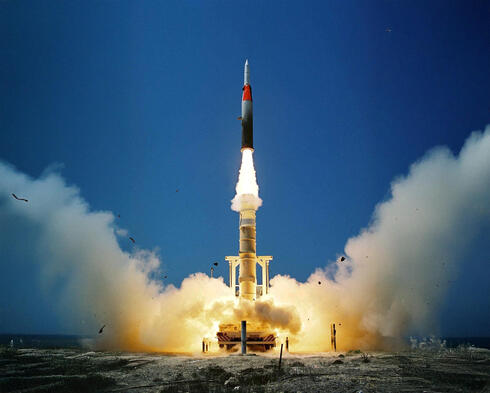
With the IDF increasingly focused on Iran amid the continuing regional escalation and U.S. military preparations to expand operations following President Donald Trump's threats, a senior military officer is warning that Israel could face shortages of critical munitions and interceptor missiles if another major conflict erupts.
In an interview with Calcalist, the officer warned that "when the next conflict comes, we will be less prepared."
"We are facing a serious breakdown in force build-up that is preventing us from preparing properly for the next round," he said. "During the last war with Iran, Tel Aviv avoided large-scale destruction. We want to ensure that remains the case in the next war."
The warning comes as the Defense Ministry and Finance Ministry remain locked in a dispute over the size of the 2026 defense budget.
Earlier this month, Prime Minister Benjamin Netanyahu approved a framework prepared by the National Security Council that calls for an immediate NIS 15 billion ($5B) increase in the defense budget. However, according to defense officials, the additional funding has yet to be transferred.
Under the NSC framework, additional assessments by the NSC, Defense Ministry, and Finance Ministry are scheduled for October and November to determine whether another NIS 25 billion should be allocated. Defense officials argue the additional funding is necessary to finance military operations across multiple fronts, including maintaining security zones in Lebanon, Gaza, and Syria.
The NSC framework also authorizes the Defense Ministry and the IDF to commit to approximately NIS 130 billion in future procurement contracts, based on an additional NIS 350 billion that is expected to be added to the defense budget baseline beginning in 2027 over the following decade.
According to sources in both the IDF and the Defense Ministry, that authorization has yet to be implemented.
"The Ministerial Committee on Procurement met for six hours, reviewed all of the procurement plans, and agreed they should move forward," the senior officer said. "But first, the budget ceiling has to be increased. I'm a military officer, I don't understand fiscal formulas. What I do understand is that if we cannot sign contracts with suppliers in Israel and abroad, IDF stockpiles will not recover after nearly 1,000 days of regional war."
"Every day that passes leaves us less prepared. We are already short of munitions and interceptor missiles for our air defense systems. We are missing procurement opportunities."
The defense budget currently stands at NIS 143 billion after receiving an additional NIS 22 billion following the Iran war earlier this year. If the full NSC framework is implemented, the budget would rise to approximately NIS 183 billion by the end of the year, an unprecedented level.
"During this prolonged war, we have used roughly 100,000 aerial munitions," the officer said. "We need to replenish those stocks, along with interceptor missiles ranging from Iron Dome to Arrow 3. We also need additional ground munitions because we expect to remain in Lebanon at least through the end of the year, and we still don't know what lies ahead in Gaza. The situation is not good."
He warned that while the military continues conducting operations, it has been unable to place new orders with Israeli defense manufacturers.
"We continue consuming munitions while our inventories keep shrinking. The political leadership must resolve this situation. After roughly 40 days of fighting alongside the United States against Iran, we're now in an arms race with Tehran. Every morning we receive intelligence about how the other side is rebuilding its capabilities, and it's clear there's an intense race underway. The IDF is not part of it, let alone winning it. That worries me."
Defense Ministry officials have also expressed frustration over delays in approving new procurement orders.
According to defense sources, one Israeli defense company could soon be forced to shut down a production line for munitions needed by the IDF because it has not received financing for new orders.
"We are exactly where we were before the prime minister approved the NSC framework," one source said. "It's as if the framework never existed. The Finance Ministry is doing whatever it wants, and we're beginning to wonder what the point of reaching agreements with it is."
Treasury pushes back
Finance Ministry officials reject the criticism, arguing that the prolonged war has led the defense establishment to abandon fiscal discipline while repeatedly exceeding approved budget frameworks.
Officials accuse the Defense Ministry of turning the defense budget into a "black hole" that absorbs tens of billions of shekels each year at the expense of spending on education, healthcare, and social welfare.
Defense officials counter that military operations are dictated by the political leadership, not by the army itself.
According to recent estimates, the IDF's ongoing operations in Gaza, Lebanon, Syria, the West Bank, and its heightened state of readiness for a possible renewed conflict with Iran cost between NIS 100 million and NIS 150 million every day.
"We're not asking for luxuries," the senior officer said. "Preparing the IDF for the next war requires major investments in artificial intelligence, a field that evolves almost daily. Right now we cannot even procure the hardware needed to develop critical AI capabilities. The same applies to space-based assets that are essential for operating in distant theaters such as Iran and Yemen."
Budget uncertainty is also affecting deliveries of major weapons platforms, including transport helicopters and attack helicopters purchased from U.S. manufacturers.
Global demand for military equipment remains exceptionally high, creating long production queues across the defense industry. As a result, officials say that securing production slots has become almost as important as securing funding.
Any delay in placing orders could postpone deliveries by years while significantly increasing procurement costs.
"We're fighting a war unlike anything we've experienced before," a senior defense official told Calcalist. "We don't have time or money to waste. Whenever a production slot opens up at an American manufacturer, we have to grab it."
Multiple fronts strain manpower
The security situation in the West Bank has further complicated the IDF's planning.
Escalating tensions between Israelis and Palestinians, alongside a rise in attacks by Jewish extremists against Palestinians, have forced the military to reinforce the area to prevent a broader escalation. The IDF currently has about 25 battalions deployed across Judea and Samaria.
A wider conflict there would require additional resources at a time when the army is already struggling with manpower shortages.
Reserve forces have been heavily stretched since the October 7 war, with many reservists serving hundreds of days over multiple call-ups. At the same time, the military continues to face an annual shortage of roughly 15,000 soldiers, most of them combat troops or combat-support personnel, as ultra-Orthodox enlistment remains well below the army's requirements.
Despite those concerns, Finance Minister Bezalel Smotrich recently dismissed claims that rising violence by Jewish extremists in the West Bank poses a significant security threat.
Speaking at the Yedioth Ahronoth Group and Institute for National Security Studies (INSS) national security conference, Smotrich said: "Statistically, there is the least violence among the settlers in Judea and Samaria. The claim that residents are provoking violence is false. It's part of a false campaign, just like claims about violence on the beaches of Tel Aviv."
Senior Finance Ministry officials responded to the defense establishment's criticism by saying that the additional budget approved by the government would be transferred in the coming days.
According to the ministry, "The Defense Ministry's independent budget management has not been conducted in accordance with legal requirements and mandatory procedures, making it difficult to transfer such large sums within days. Professional teams from both the Defense Ministry and the Finance Ministry are currently making the necessary adjustments."



