










Palo Alto veterans’ Pluto Security emerges from stealth with $42 million to secure employee-built AI tools
Pluto, founded in 2025, says it has secured more than 1 million endpoints and signed over 40 enterprise customers, generating millions of dollars in recurring revenue as companies grapple with the risks created by employees’ use of AI tools and applications.
Cybersecurity startup Pluto Security has emerged from stealth with $42 million in total funding, including a latest round of approximately $34 million led by Jump Capital. The round also included participation from Shlomo Kramer’s Skinos Ventures and AlphaDrive Ventures. The Seed round was led by TLV Partners, with participation from Ansa Capital.
The company has also attracted prominent entrepreneurs and investors, including Ariel Maislos; Armis founders Yevgeny Dibrov and Nadir Izrael; Sharin Fisher Dibrov; Descope co-founder Slavik Markovich; Assaf Ezra, a partner at Andreessen Horowitz (a16z); and Idan Tendler, an investment partner at Vine Ventures.
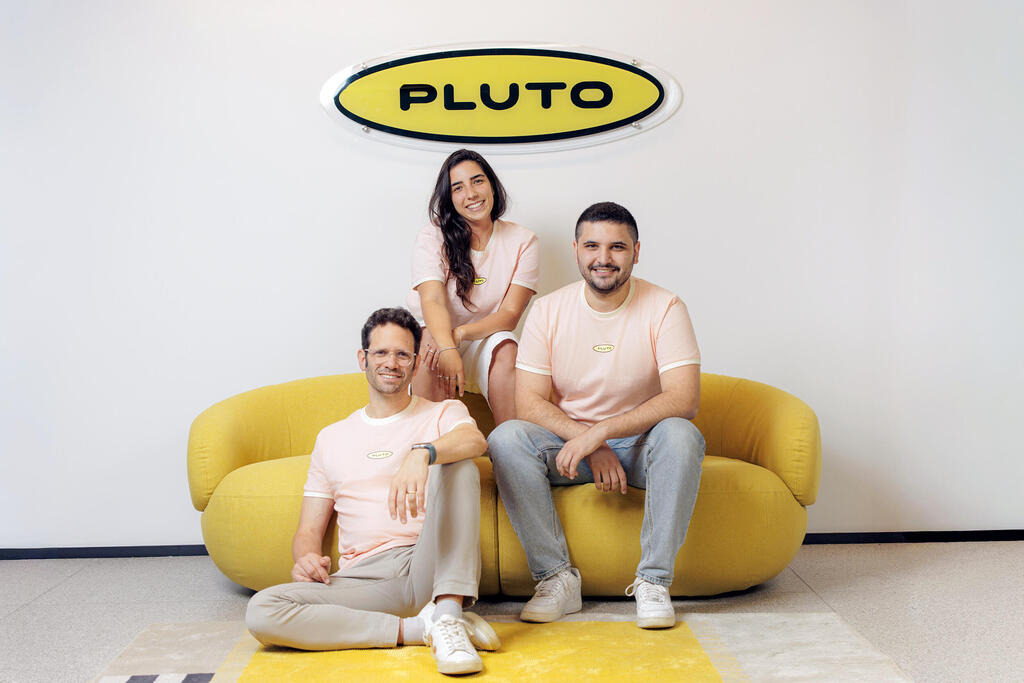
In a conversation with Calcalist, Shahar Bahat, Pluto’s CEO and co-founder, said the company focuses on securing endpoints as AI changes how employees work and build software.
“The cyber world involves a wide range of activities, and we focus on endpoints. We are witnessing a fundamental shift in endpoint agents and how to secure them,” Bahat said. “Employees have changed the way they work across three distinct layers. They use numerous AI tools, an average of 15 per employee, alongside other tools and SaaS applications that can serve as entry points for attackers. They also build their own tools, which can take on a life of their own. Securing the endpoint requires understanding and protecting all three layers. None of our competitors covers all three the way we do.”
Bahat said Pluto had generated millions of dollars in revenue and secured more than 40 paying customers despite operating for less than a year. “Ours is the only comprehensive solution in the industry. We don’t just cover developers; we also cover marketing and sales teams. The fact that we enable the organization to function and operate effectively represents a significant shift.”
Pluto says that within six months of beginning commercial operations, it had reached annual recurring revenue in the millions of dollars, secured more than one million endpoints worldwide and attracted more than 40 enterprise customers. These include Oscar Health, Workato, Sixt and AlphaSense, as well as Fortune 500 organizations.
The company is developing a platform designed to secure the AI tools employees use and the applications they build with them. It gives information security teams visibility into an organization’s AI environment, including the tools employees use, the components and services connected to them, and the applications, agents and automations they create. The platform analyzes activity and associated risks, allowing security teams to block dangerous actions in real time without necessarily disabling the tools or applications themselves.
Pluto was founded in 2025 by Bahat, chief product officer Tal Ofer Regev and chief technology officer Gil Maman. The company describes itself as female-led and has grown to more than 50 employees across Israel and the United States. Its founders have backgrounds spanning Microsoft, Palo Alto Networks, Bridgecrew and the IDF’s Unit 8200.
Bahat previously held senior cybersecurity leadership roles at Microsoft and Palo Alto Networks. Regev served as vice president of R&D at Palo Alto Networks, where he managed a team of more than 150 people. Maman spent more than six years in Israeli Military Intelligence, holding technical leadership roles in cyber R&D and security engineering.
Bahat said she had spent five years in Unit 8200, where she received the Israel Defense Prize, before moving into the startup world and later joining Microsoft. She said Pluto aims to increase sales five- or sixfold and that she plans to move to the United States. The company will use the new funding to continue investing in product development and research and expand its U.S. operations.
The growth of AI tools is changing the corporate workplace, allowing employees who are not software developers to build applications themselves. Tools such as Claude Code, Codex, Cowork, Lovable and Base44 enable employees to create applications, AI agents, automations and workflows without relying on traditional development teams.
These tools also introduce a new AI supply chain spanning skills, extensions, code packages, Model Context Protocol (MCP) components, models and other dependencies. According to Pluto, employees across its customer base use hundreds of such components to build thousands of applications.
The rapid pace of change makes it difficult for information security teams to vet every tool and component in advance. Traditional security systems were not designed for an environment in which employees can independently add software, connect services and build applications that become part of an organization’s systems.
Pluto’s platform combines endpoint visibility with contextual risk analysis and real-time enforcement. The company says this allows security teams to distinguish legitimate activity from risky behavior and enforce organizational policies without unnecessarily disrupting work. For example, an employee can continue using an AI tool while a malicious skill is blocked, or an application can remain functional while its access to sensitive data or authentication credentials is restricted.
Alongside product development, Pluto invests in security research, community tools and free resources to help cybersecurity professionals understand emerging AI risks. One example is Plutonium, a free AI supply chain security hub powered by the company’s proprietary RisksDB, which helps security professionals assess risks associated with components such as skills and extensions. Pluto says thousands of security professionals use and contribute to the platform.
The company says this combination of research, community resources and product development has helped generate inbound demand from enterprise customers.
“Security has traditionally been built around stopping things, but that model breaks down when the business is moving faster than security can evaluate every new tool,” Bahat said in the company’s announcement. “We took a different approach from the beginning: understand what users are trying to accomplish, understand their intent, and give security teams the context to enable that work safely rather than simply block it.”
“What stood out to us about Pluto was a fundamentally different approach to a rapidly growing problem,” said Rona Segev, Co-Founder and Managing Partner at TLV Partners. “As AI reshapes how people work, Pluto gives security teams a way to understand what’s happening and act with precision, rather than simply blocking innovation. That philosophy is deeply embedded in the company, and the speed of its growth shows how strongly it resonates with enterprises.”



