









Bill Ackman predicts AI will help Israel produce a trillion-dollar company, warns democratic socialism threatens the U.S. economy
The Pershing Square billionaire, who has invested close to $100 million in Israel, believes AI will give small, highly skilled teams a competitive edge. In an interview with Calcalist, he discusses his Israeli investments, the risks of political polarization and a $400 million initiative to accelerate medical innovation inspired by his daughter’s recovery.
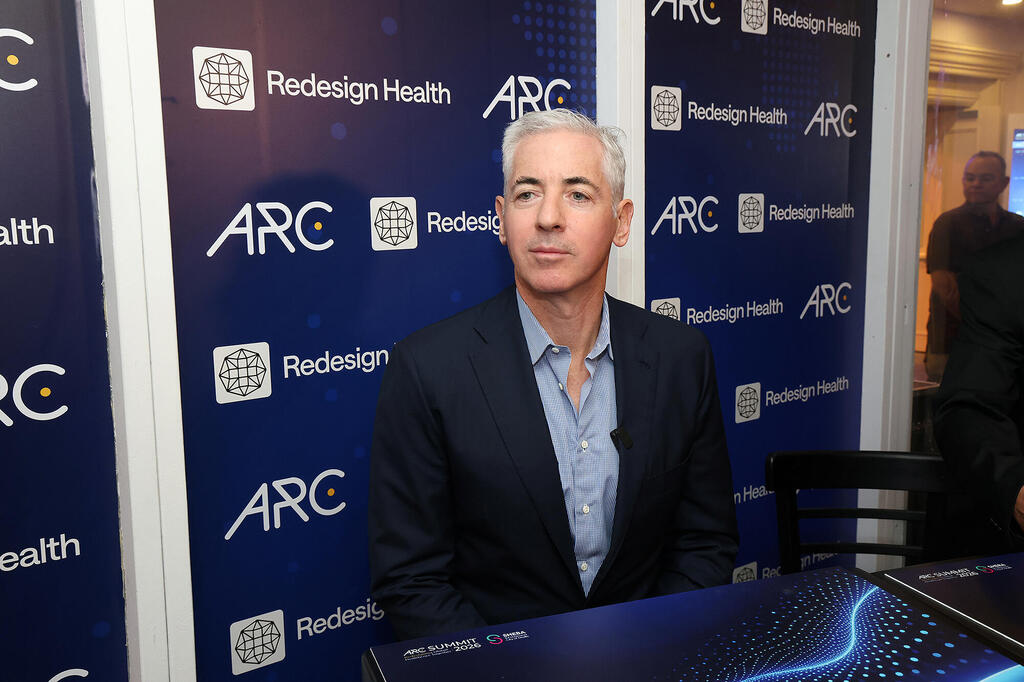
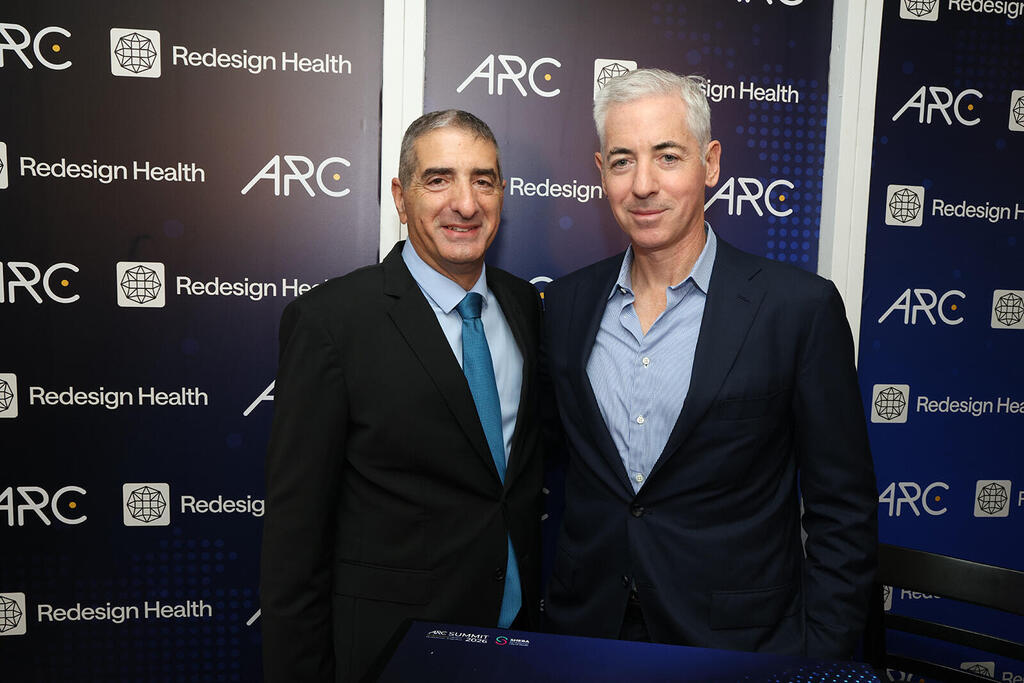
Last Thursday, American billionaire Bill Ackman stirred a minor storm in Israel and on X, where he has 3 million followers. “We came to Israel now because it is very important to my Israeli wife, Neri Oxman, to be here to vote,” said the founder and CEO of Pershing Square Capital Management. He made the remark during a conversation with Prof. Yitshak Kreiss, director of Sheba Medical Center, at the hospital’s annual ARC Summit on medical innovation.
The unexpected statement immediately raised questions. Does Ackman himself vote in Israel? No, because he is not an Israeli citizen. For whom will Oxman vote? That remains unknown, despite speculation prompted by the remark. And how would Ackman vote if he had the right to do so?
Ackman offered some clues. He said the only Israeli political figure he had met personally was Benjamin Netanyahu. “He did a good job during the war. Israelis might not feel it, but the risk in the Middle East has decreased significantly, and the prospects for peace have improved. If the Iranian issue is resolved, there could be a major ‘peace dividend,’ along with an expansion of the Abraham Accords.”
By Friday, Ackman had posted a clarification for his followers. “I want to make sure that a comment I made to the Israeli press is not misinterpreted. I spoke from my perspective as an American, and I don’t intend to weigh in on the upcoming Israeli election. Furthermore, I don’t know all of the candidates; I am not an expert in Israeli politics; and therefore I don’t know who is the best choice for the country. This is obviously a decision best made by the Israeli citizens. With respect to Neri, we agree on some politics and disagree on others. As an Israeli, she will vote in the election in a manner that she believes is best for Israel. One shouldn’t draw any conclusions about my remarks on Israel as somehow implying anything about Neri’s politics and whom she intends to vote for.”
The clarification notwithstanding, Ackman has hardly concealed his political views in recent years. His support for President Donald Trump, particularly striking given that he previously voted for and donated to Democrats, has become well known in the United States, especially since October 7, 2023.
Until then, Ackman was known primarily as a Wall Street investor. He had built a reputation for lengthy, meticulously argued letters, but they focused on his activities as an activist investor and largely stayed within the world of finance.
That changed after October 7. Ackman’s Jewish identity, his marriage to Israeli academic Neri Oxman, and the wave of anti-Israel sentiment that emerged at Harvard University, his alma mater and an institution he has supported financially, helped draw him into public political debate. He became a central figure in the campaign against Claudine Gay, Harvard’s first Black president, who resigned in January 2024 amid controversy over the university’s handling of antisemitism and allegations of plagiarism.
In a special interview with Calcalist immediately after leaving the stage at Sheba’s innovation summit, Ackman made clear that his concerns now extend well beyond financial markets. He sees political polarization as one of the biggest threats to the U.S. economy and regards the rise of democratic socialism as a danger to both the United States and Israel.
“The greatest risk to the American economy today is political polarization. In this regard, the situation is reminiscent of Israel,” he said. “Regarding the U.S. midterm elections, I am deeply concerned about the rising influence of the Democratic Socialists, as they pose a threat to the American economy, to Israel, and to the Jewish people as a whole.”
Ackman has also become a prominent voice on X, where he passed the one-million-follower mark by the end of 2023. Among his frequent targets is New York City Mayor Zohran Mamdani.
You live and do business in New York. Have you felt the effects of Mamdani’s policies, both in terms of taxes on the wealthy and his rhetoric on antisemitism?
“More than Mamdani’s economic repercussions, my primary concern stems from the rhetoric employed by politicians like him, rhetoric that fosters an environment increasing the risk of antisemitic incidents. On the economic front, the most glaring change since his election is the significant increase in the number of homeless people on the streets of New York.”
“The problem with his tax policy is that it only takes a few people leaving, like Ken Griffin, founder of the massive hedge fund Citadel, for the city to lose a staggering amount of tax revenue. Businesspeople and entrepreneurs can live anywhere, which is precisely what is fueling Florida’s current surge. Personally, I’ve noticed that my local New York taxes are now nearly equal in magnitude to my federal tax burden.”
For Ackman, the argument extends beyond New York. He believes the United States is increasingly at risk of losing wealthy individuals and businesses to lower-tax jurisdictions, and sees the movement of capital and talent as evidence that market-based economies are outperforming more socialist models.
“It’s clear today that nations that have embraced a capitalist economic model are outperforming those with a socialist one,” he said. “A striking example is France, home to one of the world’s most generous welfare states, yet it is precisely there that some of the most intense unrest has erupted.”
He also points to California, which has long been one of the world’s leading centers of technological innovation. “Much like Israel, it boasts a high concentration of talent and intellect, with a high ratio of innovations relative to its population size. Yet the way the state is managed is driving its residents to Miami and other parts of the U.S., where they can benefit from lower taxes.”
“Prominent business figures like Sergey Brin of Google or Mark Zuckerberg of Meta are buying homes in Miami for hundreds of millions of dollars. This saves them billions in taxes in California, while Florida thrives.”
Are you comparing war-torn Israel to California, the very place from which the global AI revolution emerged?
“Yes. I think that Israel has one of the best economies in the world today. I believe, as I also stated during my visit here last year, that a trillion-dollar company will emerge from Israel within a few years. If not within the next five years, then certainly within a decade.”
Ackman argues that artificial intelligence makes that prospect more realistic by reducing the importance of scale and increasing the value of concentrated talent. Israel, with a population of around 10 million, may be small compared with the United States, but he sees that as a potential advantage rather than a structural weakness.
“The advent of AI makes this prospect even more tangible. Israel’s inherent disadvantage is ostensibly its size, a population of just 10 million competing against a nation like the United States, with its 350 million people. Yet, thanks to AI, large numbers of people are no longer required. What matters is a concentration of talent: small, high-caliber teams capable of achieving extraordinary results. That is precisely what Israel possesses.”
He argues that large populations can also bring significant fiscal burdens, pointing to the United States’ roughly $40 trillion national debt. “Israel, by contrast, has a small population but boasts the highest concentration of IQ and intellectual property relative to its size, which is precisely what matters in the age of AI.”
Israel lacks companies focused on large language models, the technology underpinning much of the AI revolution. Some argue that the country has already missed the boat.
“LLM companies, such as Anthropic and OpenAI, are not the ones that will capture the bulk of the value. Only a handful of model-building companies will reach a trillion-dollar valuation. The vast majority of value will be created by companies that apply this technology.”
Ackman sees defense technology and cybersecurity as natural areas of strength for Israel. “AI significantly amplifies cyber risks, and I am already investing in several Israeli cybersecurity firms,” he said, declining to name the companies he is currently considering.
He disclosed that he participated in the latest funding round for defense-tech unicorn Kela and has also invested in Two Delta, a startup working on training and accelerating AI models.
There is a growing sense on Wall Street that the AI bubble is beginning to burst. What is your view?
“There are various players in the AI space. Some are builders of data centers who are highly leveraged, and that introduces a level of business risk. But as for AI itself, I don’t believe it’s a bubble. There are some crazy valuations, particularly in the private market, though less so in the public market.”
How much have you invested in Israel to date?
“Close to $100 million, and I am still actively seeking further investments. I make some of these investments through Pershing Square and others privately.”
One of those private investments was a stake of about 5% in the Tel Aviv Stock Exchange, which Ackman and Oxman acquired shortly after October 7, 2023. “We acquired it just a week after October 7, following a presentation that lasted only an hour. Since then, its value has jumped tenfold. That $25 million stake is now worth $250 million, truly a venture capital-style return,” he said, laughing.
Ackman is also establishing Pershing Square Ventures, which will operate as a venture capital fund. Although it will represent only a small fraction of the $33 billion in assets under management at Pershing Square, he plans to use it to make further investments in Israel, alongside philanthropic contributions.
Last week, it was announced that fellow Wall Street investor John Paulson had donated $250 million to the Hebrew University of Jerusalem. About a year earlier, Jon Gray of investment firm Blackstone donated $125 million to the Faculty of Medicine at Tel Aviv University.
Are you considering a similar philanthropic commitment?
“Yes, we are working on that right now. I can’t name names yet, but we are working with two universities in Israel. We might make an announcement toward the end of the year.”
From Wall Street to brain rehabilitation
A significant portion of Ackman’s time is now devoted to a venture far removed from Wall Street. His personal experience with his daughter’s medical emergency has led him to focus on accelerating medical research and getting promising technologies into hospitals faster. It was also one of the reasons he connected with Sheba Medical Center and its ARC innovation center.
In February, Ackman’s 26-year-old daughter, Lucy, was found unconscious in her New York apartment after suffering a major brain hemorrhage. She underwent emergency surgery. According to Ackman, data from Lucy’s Oura Ring, a wearable device that tracks health and activity metrics, later indicated that the hemorrhage had begun around 9 a.m. the previous day, more than 19 hours before the surgery was completed.
Ackman said that the time elapsed before the operation complicated her treatment. Standard medical practice generally advises against surgery in cases of significant brain hemorrhage when too much time has passed since the bleeding began. Despite the severity of her condition, Lucy survived. She lost her vision and much of her ability to speak and is now undergoing a lengthy rehabilitation process to regain both.
“Right from the start of her treatment, I said we would do our utmost and invest every available resource, not just into her care, but also into making these treatments accessible to others,” Ackman said. “Today, she is recovering. She is still the same person, though there is a long road ahead regarding her speech and vision. What matters is that she is making progress.”
The experience prompted Ackman to conclude that research and development in brain rehabilitation must be accelerated and that promising treatments should become more widely available. To that end, he has committed $400 million to establish the Ackman Oxman Institute (AOI), using funds from Pershing Square, which listed on the New York Stock Exchange in the summer. The institute plans to invest in startups and emerging technologies, with the aim of bringing them into hospitals as quickly as possible.
“Currently, it takes an average of 17 years for a new technology to be adopted in hospitals,” Ackman said. “We are looking for startups in the field of brain-computer interfaces, or BCI, and have already invested in several.”
That effort has brought him into discussions with Sheba’s ARC innovation center, whose model he hopes to draw on as the new institute takes shape.
“This is also where we connect with Sheba and its innovation arm, ARC, which operates according to a model we intend to adopt for the institute. We are currently in discussions with ARC,” he said.
Ackman said he spoke with Kreiss after Lucy’s medical emergency. “We are shaping our medical innovation model, drawing inspiration from the ARC Center’s model. Sheba is one of the most prolific systems in the world when it comes to establishing companies and generating medical innovation. We are certainly learning from Sheba.”



