










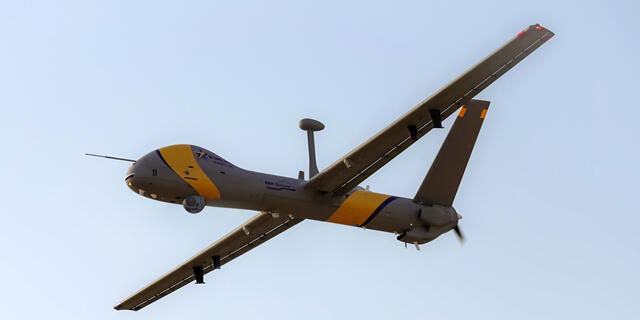
Israeli-designed Hermes 900 drone crashes again in India, raising questions over expanding fleet
The second accident involving the locally built Drishti-10 in 18 months comes as the Indian Navy plans to acquire 10 more Israeli-designed surveillance drones for the Indian Ocean.
The Indian Navy is investigating the second crash in 18 months of a surveillance drone based on Elbit Systems' Israeli-developed Hermes 900, an incident that could complicate plans to significantly expand India's fleet of the aircraft.
The unmanned aircraft, known in India as the Drishti-10 Starliner, crashed earlier this month during a routine training sortie shortly after taking off from the Naval Air Enclave in Porbandar, in the western state of Gujarat. The drone came down in an open field near Dharampur village, about six kilometers from the coastal city. According to the Indian Navy, no injuries or damage on the ground were reported.
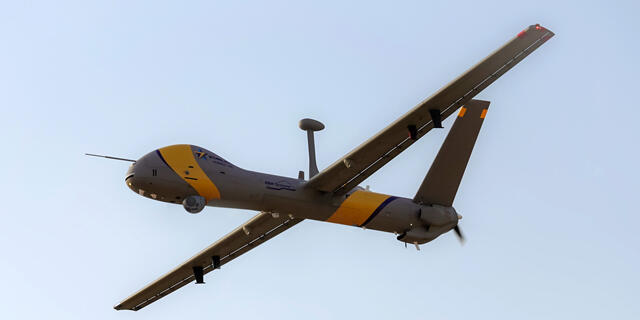
"The Indian Navy confirms the crash of Uncrewed Aerial Vehicle Drishti-10 off Porbandar airfield during a training sortie this afternoon. No injury or loss of life has been reported on the ground. The cause of the incident is being investigated," the service said in a statement.
A board of inquiry has been established to determine whether the crash resulted from a technical malfunction or the loss of the aircraft's communications link.
The accident marks the second mishap involving the Drishti-10 since India began acquiring the platform under an emergency procurement program launched in 2023. Under that program, the Indian Army and Navy each ordered two aircraft at a cost of approximately 140 crore rupees ($15M) per drone.
The Drishti-10 is manufactured in India by Adani Defence and Aerospace under a licensing agreement with Israel's Elbit Systems and is the Indian version of the combat-proven Hermes 900, one of Israel's best-known medium-altitude, long-endurance unmanned aerial vehicles.
The previous accident occurred in January last year, also near Porbandar, when a Drishti-10 being operated by the manufacturer during pre-acceptance trials crashed into the Arabian Sea after reportedly losing its communications link before it had formally entered naval service. That aircraft was later replaced by the manufacturer.
The two incidents are likely to draw renewed attention to the platform's reliability as the Indian Navy pushes ahead with plans to acquire 10 additional Drishti-10 drones. According to defense sources cited in the original report, the expanded fleet is intended to provide persistent, around-the-clock surveillance across the Indian Ocean Region, where Chinese naval vessels and survey ships have become an increasingly regular presence.
The Hermes 900 platform is designed for long-endurance intelligence, surveillance and reconnaissance missions. The Drishti-10 can remain airborne for up to 36 hours, carry payloads of up to 450 kilograms, and operate at altitudes of 30,000 feet.
The Indian Navy currently operates the drones from Porbandar to enhance maritime domain awareness over the Arabian Sea, reducing the burden on its fleet of P-8I maritime patrol aircraft. The Indian Army flies the platform from Bathinda to monitor the country's western frontier with Pakistan.



