









The race to replace Jensen Huang: Nvidia's potential successors include an Israeli executive
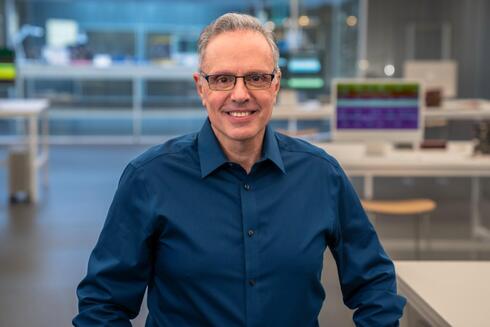
Apple's Johny Srouji, who leads the company's hardware operations, is among the names that could emerge in discussions about Nvidia's future leadership. Other potential candidates include Nvidia's Ian Buck and Colette Kress, Arm's Rene Haas and AMD's Lisa Su.
A computing executive, the company's CFO, the CEO of a rival chipmaker or even one of Apple's most senior executives? Nvidia's board has yet to decide whether to remove CEO and co-founder Jensen Huang amid the controversy surrounding his alleged relationship with a Chinese woman suspected of espionage. But speculation about potential successors is already intensifying. Here are some of the most prominent names being discussed.
One of the leading internal candidates is Ian Buck, who leads Nvidia's hyperscale AI hardware and software products. Buck is also among the favorites on prediction market Polymarket. He joined Nvidia in 2004 and played a central role in developing CUDA, the software platform that helped transform the company's graphics processors into the foundation of modern AI computing. His technical expertise and deep understanding of Nvidia's technology make him a natural candidate to oversee its future product strategy. However, Bloomberg has reported that he lacks the operational experience typically expected of a CEO.
Another prominent name is Colette Kress, Nvidia's executive vice president and chief financial officer. Aside from Huang, she is arguably the company's most recognizable senior executive among investors, having served as CFO since 2013 and regularly appearing alongside him on earnings calls. Kress is considered a possible choice for interim CEO if Huang is removed, providing continuity and reassurance to investors. Her background, however, is primarily in finance, making her a less obvious candidate for the permanent role at a company whose competitive advantage is so closely tied to its technology.
Michael Kagan, Nvidia's chief technology officer and a co-founder of Mellanox, is another potential internal candidate. Kagan oversees important areas of the company's technology development, including the architecture of its next-generation AI data centers, which Nvidia calls "AI factories." His responsibilities also extend to longer-term research in fields such as scientific computing, healthcare and robotics.
Outside Nvidia, one of the most prominent potential candidates is Rene Haas, CEO of Arm and a former Nvidia executive. Haas has experience managing a complex ecosystem of technology partners and customers, as well as a deep understanding of the semiconductor industry and the AI market. Nvidia attempted to acquire Arm in 2020, in a deal that ultimately collapsed amid regulatory opposition. Haas's industry experience could make him an attractive external candidate, although his current position at Arm would complicate any move.
Another Israeli executive whose name could emerge in succession discussions is Johny Srouji, Apple's chief hardware officer. Srouji has played a central role in Apple's silicon strategy, overseeing the development of chips used across the company's products. Among his most significant achievements was helping lead Apple's transition from Intel processors to its own chips in Mac computers, alongside the development of processors for the iPhone and iPad. In April 2026, Apple promoted Srouji to chief hardware officer, expanding his responsibilities to include both hardware engineering and hardware technologies. He is widely respected in the semiconductor industry for the scale and complexity of the projects he has led.
AMD CEO Lisa Su is another name mentioned as a potential candidate. She leads one of Nvidia's fiercest competitors, which has been expanding its portfolio of data-center processors and AI accelerators to challenge Nvidia's dominance. Under Su's leadership, AMD has staged a significant turnaround, overtaking Intel in market value and strengthening its position in the data-center market. Her track record in the semiconductor industry would make her a formidable candidate, although leaving AMD to take the helm of its biggest rival would be an extraordinary move.
Other names that could enter the discussion include Matt Garman, CEO of Amazon Web Services; Sanjay Mehrotra, chairman and CEO of memory-chip maker Micron Technology; and Amin Vahdat, a senior Google executive who leads the development of the company's tensor processing units, or TPUs, which compete with Nvidia's AI accelerators.



