










Behind the Bank of Israel's optimism lies a far more cautious outlook
Senior officials warned privately of weaker long-term growth, mounting fiscal risks and tighter limits on future interest-rate cuts than the official report suggests.
The Bank of Israel's monetary policy report, published earlier this week, paints a relatively optimistic picture of the economy. Israel is emerging from the war faster than expected, J.P. Morgan, for example, forecasts annualized growth of 11% in the second quarter. Inflation has fallen to 1.6%, below the midpoint of the Bank's target range, the budget deficit has narrowed to 3.8% of GDP, and the central bank's own forecasts imply three interest-rate cuts over the next 12 months, including the reduction announced this month. Meanwhile, while inflation has accelerated in the United States and the eurozone, it continues to ease in Israel, helped largely by a roughly 10% appreciation of the shekel through May.
The message conveyed by the report is clear: the economy has proved resilient, inflation is under control, and the path toward monetary easing remains open.
Yet behind closed doors, the tone was markedly different.
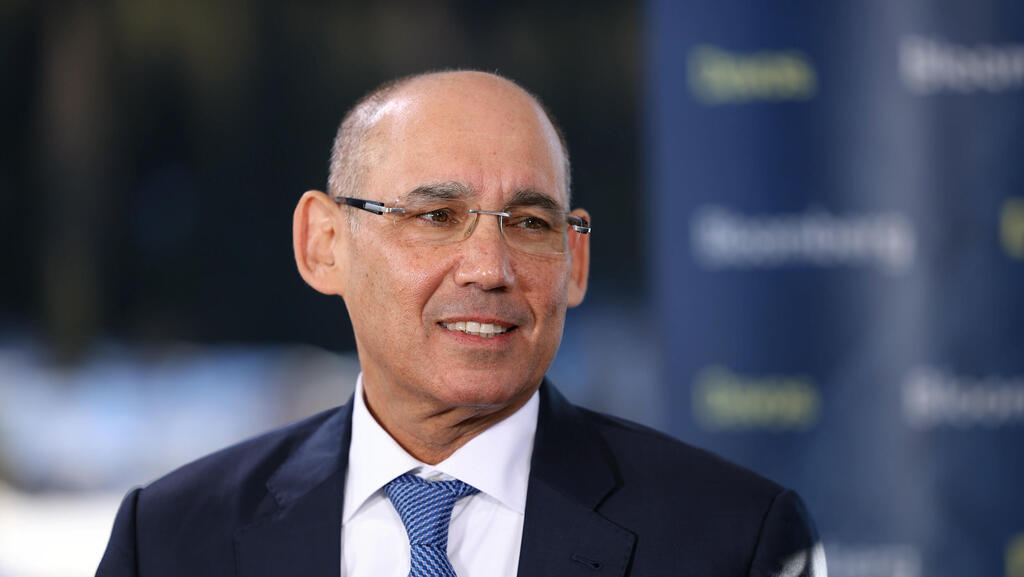
About a week ago, Governor Amir Yaron, Deputy Governor Andrew Abir and Research Department Director Adi Brender presented their views to senior economic forecasters. Their remarks revealed a much more cautious assessment of Israel's economic outlook than the official report suggests.
The first message concerns the country's long-term growth potential. According to Yaron, Israel's potential growth rate has declined from around 3.9% before the war to roughly 3.5% today. This is not merely another forecast revision, it is an acknowledgement that the war has caused structural, rather than cyclical, damage to the economy.
The governor described what economists refer to as a "scarring effect": reservists returning from prolonged military service with lower productivity than before the war, alongside colleagues who absorbed additional workloads at the expense of their own efficiency. Lower potential growth implies weaker tax revenues over time, a slower decline in the debt-to-GDP ratio and a lower long-term ceiling for economic growth.
Yaron also highlighted another structural concern: Israel's export growth is becoming increasingly concentrated in a relatively small number of industries, making the economy more vulnerable to sector-specific shocks. The report itself hints at this risk, noting that much of the recent expansion reflects overseas production by multinational companies rather than domestic activity.
The second message concerns interest rates.
Yaron challenged the common practice of measuring the real interest rate simply as the policy rate minus inflation. Instead, he argued that policymakers should focus on real yields implied by two-year inflation-linked government bonds. By that measure, he said, Israel's real interest rate is already lower than that of the United States.
The implication is significant. It suggests there is less room for aggressive monetary easing than headline inflation figures imply.
Brender reinforced that message, cautioning against accelerating the pace of rate cuts beyond the Bank's published forecast. The July reduction, it appears, should not be viewed as the beginning of an aggressive easing cycle but rather as a carefully calibrated step, with every additional cut likely to be subject to considerable debate within the Bank.
The third message shifts the focus to fiscal policy.
Brender warned that the dissolution of the Knesset has increased the risk of fiscal instability. He also noted that, unlike previous years, the civilian budget is expected to be fully implemented rather than under-spent.
That observation casts doubt on the fiscal improvement highlighted in the report. While the deficit has declined to 3.8% of GDP, and fell further to 3.3% in June, the improvement largely reflects the constraints imposed by a continuing budget that temporarily limited government spending.
Looking ahead, the fiscal picture becomes considerably less encouraging. The Bank projects a deficit of 4.9% this year, rising to 5.5% if the government approves the proposed defense budget of 183 billion shekels, including an additional allocation of up to 25 billion shekels currently under discussion.
The fourth message may be the most troubling for policymakers.
According to Yaron, even if defense spending eventually stabilizes at around 5.5% of GDP, reducing Israel's debt burden over time will be extremely challenging. If defense spending remains closer to 7%-8% of GDP for an extended period, achieving a sustained decline in the debt-to-GDP ratio may become nearly impossible.
That assessment is unlikely to reassure international credit-rating agencies. It also carries direct consequences for taxpayers. Every additional 0.1 percentage point in the government's borrowing costs, on debt approaching 70% of GDP, translates into hundreds of millions of shekels in annual interest payments, reducing the resources available for education, healthcare, welfare and even future security spending.
The fifth message came from Deputy Governor Abir.
The report describes the Bank's $1.8 billion foreign-exchange purchases during May and June as a temporary measure aimed at ensuring orderly market conditions. Abir, however, suggested a broader role for intervention, describing foreign-exchange operations as another monetary policy instrument that can be deployed whenever necessary to achieve the Bank's objectives.
His remarks imply that exchange-rate policy is becoming increasingly important. If the shekel weakens and the disinflationary effect of a stronger currency fades, inflationary pressures could quickly return, making further rate cuts more difficult.
Taken together, these five messages paint a noticeably different picture from the one presented in the official report.
Publicly, the Bank of Israel is signaling resilience, moderating inflation and a gradual easing cycle. Privately, its senior leadership appears considerably more cautious, emphasizing weaker long-term growth, tighter constraints on future interest-rate cuts, mounting fiscal risks and the growing challenge of maintaining debt sustainability.
The implication is that the era of easier monetary policy may be far shorter, and far more conditional, than financial markets currently expect.
In response, the Bank of Israel said: "The Research Department has revised all of the macroeconomic data, including those referenced above, in the forecast it published. Most of these data also appear in the documents accompanying the interest-rate decision. As published, under the baseline scenario, growth is expected to reach 4% in 2026 and 5.5% in 2027, while the policy rate and inflation one year from now are forecast at 3% and 1.8%, respectively."



