










Israel plans to build its own AI infrastructure with 300,000 GPUs
National AI chief Erez Askal says the country must control the technology powering critical services as energy, water and healthcare become increasingly dependent on artificial intelligence.
Israel plans to build its own artificial intelligence infrastructure, including 300,000 GPUs and a domestic foundation model, as the government seeks to reduce the country's dependence on foreign technology companies.
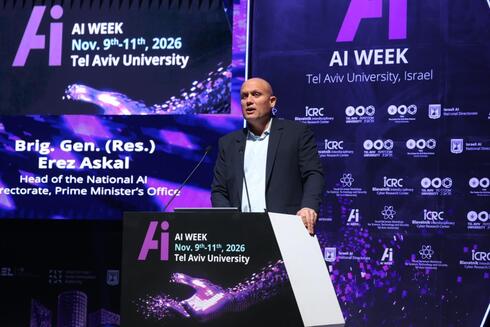
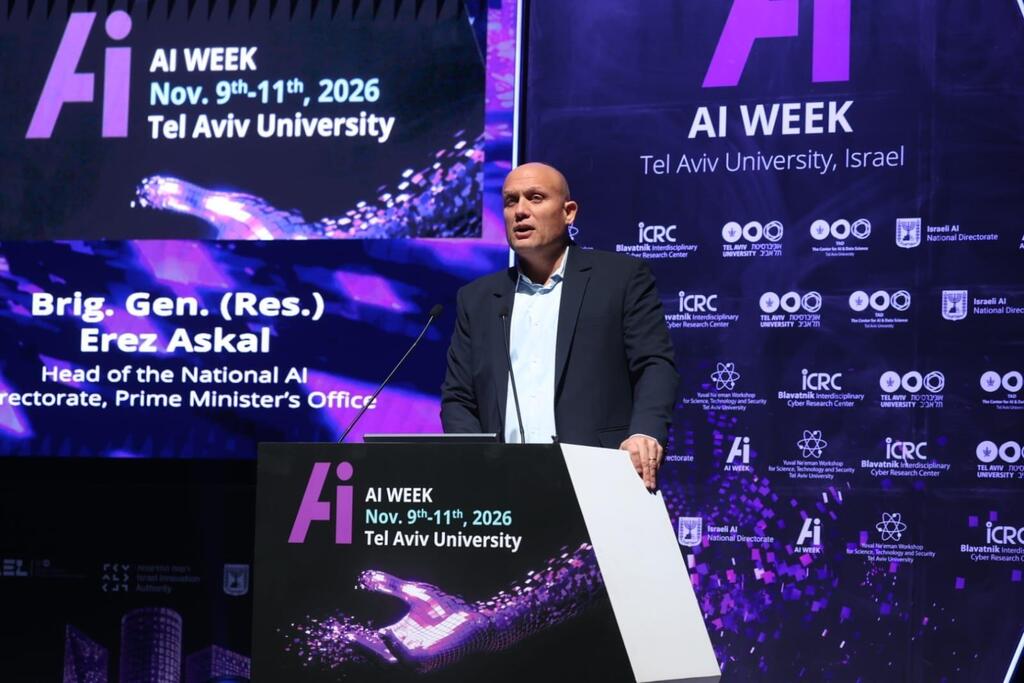
“If it's not your AI, you have no control over your country,” Brig. Gen. (Res.) Erez Askal, head of the National AI Directorate at the Prime Minister's Office, said Monday at AI & Cyber Week at Tel Aviv University.
Presenting Israel's national AI strategy, Askal warned that within five to seven years, essential systems such as energy, water and healthcare are expected to rely increasingly on artificial intelligence. He argued that dependence on foreign companies for the models and infrastructure powering these services could leave countries vulnerable to commercial interests and disruptions in access.
“Today, countries depend on commercial companies that have their own business interests and values, which are not necessarily aligned with those of the countries they serve,” he said. “Nor can countries be certain that they will have continuous access to these services and models in the long term. That is why we have decided to build our own sovereign AI stack.”
The strategy does not call for Israel to develop everything independently, but rather to maintain control over critical parts of the technology while working with international partners.
Askal said Israel needs approximately two gigawatts of electricity capacity to support AI infrastructure, data centers and semiconductor manufacturing. The government also aims to establish a base of around 300,000 GPUs, with 100,000 serving domestic needs across academia, government, defense and startups, and another 200,000 supporting technology companies and data centers.
The targets will require substantial investment and infrastructure development. CTech has reported that Israel's electricity grid is already facing growing pressure from data center demand, raising questions about how quickly the country can accommodate the expansion.
Another central objective is developing an advanced Israeli foundation model. Askal said leading AI models are largely accessed through external cloud services, making it difficult to deploy them within a country's own systems and fully protect sensitive information. Open-source alternatives, he added, do not yet offer comparable capabilities and may not remain open.
“That is why we need to build our own frontier model, but we do not have to build it alone,” he said, adding that cooperation with countries facing similar challenges could make the project possible.
Israel has also issued a tender to establish a national quantum computer built in the country, although Askal acknowledged that the timing of a major breakthrough in quantum computing remains uncertain.
Beyond infrastructure, the strategy aims to use AI to improve public services, particularly in healthcare, education and transportation. The government has established the National Institute for Impact-Driven AI to promote practical applications in these fields.
The plan also seeks to build on Israel's strengths in cybersecurity and the integration of software with physical systems, while investing in workforce training and the development of AI skills among younger generations.
Askal also highlighted the need to address the broader social consequences of the technology, including its impact on employment, education and public trust.
“We need to talk about artificial intelligence not only in terms of technology, but also ask what kind of world we want to live in,” he said. “We are entering a period of profound disruption, with significant challenges and opportunities. But we cannot simply watch it happen. Countries that act will retain control. Israel has decided to act.”



