











Keewano raises $12 million Seed to build a new database for the age of AI agents
The Israeli startup argues that traditional databases were designed around humans asking predefined questions, not machines investigating unfamiliar patterns across billions of events. Its new system keeps data in sequence and context so AI agents can reason over it directly.
For decades, companies have built databases around a basic assumption: humans would decide what questions to ask and engineers would structure the data accordingly. The rise of AI agents is challenging that model, creating demand for systems that can retain and analyze the full sequence of events inside a business rather than simply retrieve information that has already been organized for a particular question.
That is the problem Israeli startup Keewano is trying to address. The Tel Aviv company is launching KeewanoDB, a database designed specifically for what it calls machine reasoning, alongside the disclosure that it has raised $12 million in Seed funding led by Hetz Ventures, with participation from a16z speedrun, Remagine Ventures, DIG Ventures and angel investors.
The company’s argument is that conventional analytics infrastructure was built for a world in which companies decided in advance what information mattered. Data is typically stored as rows, columns and precomputed aggregates, while questions involving the sequence of events must be reconstructed when a query is made.
That works reasonably well when a human is asking a known question through a dashboard. It becomes more difficult when an AI agent is expected to investigate a question that nobody anticipated when the data was collected.
“We were trying to use AI agents to answer business questions like ‘which of our users are on the same path as the ones who churned last month?’,” said Keewano co-founder and CEO Mark Kardashov. “You could see what happened on any dashboard, but why it happened lived somewhere the databases couldn’t reach.”
The problem is partly one of data volume and partly one of context. According to Keewano, most deployments capture only a few hundred distinct event types because each additional type requires more instrumentation and increases the cost and complexity of querying the data. Companies consequently make decisions about what information is worth retaining and often discard the surrounding context.
KeewanoDB takes a different approach. Instead of treating events as individual records that must later be pieced together, it keeps each entity’s complete sequence of events together and in order. The company says this allows queries to be answered from the underlying data without first reconstructing the sequence, reducing the amount of work required before an AI agent can reason about the result.
Related articles:
Keewano says its system can query a quarter of a billion events in half a second and return results in a format that an AI agent can immediately use.
The intended applications go beyond the questions typically answered by dashboards. An agent could investigate why a customer churned, identify the sequence of behaviors preceding an outcome, compare the histories of different groups of users or search for emerging patterns without requiring engineers to have modeled those questions beforehand.
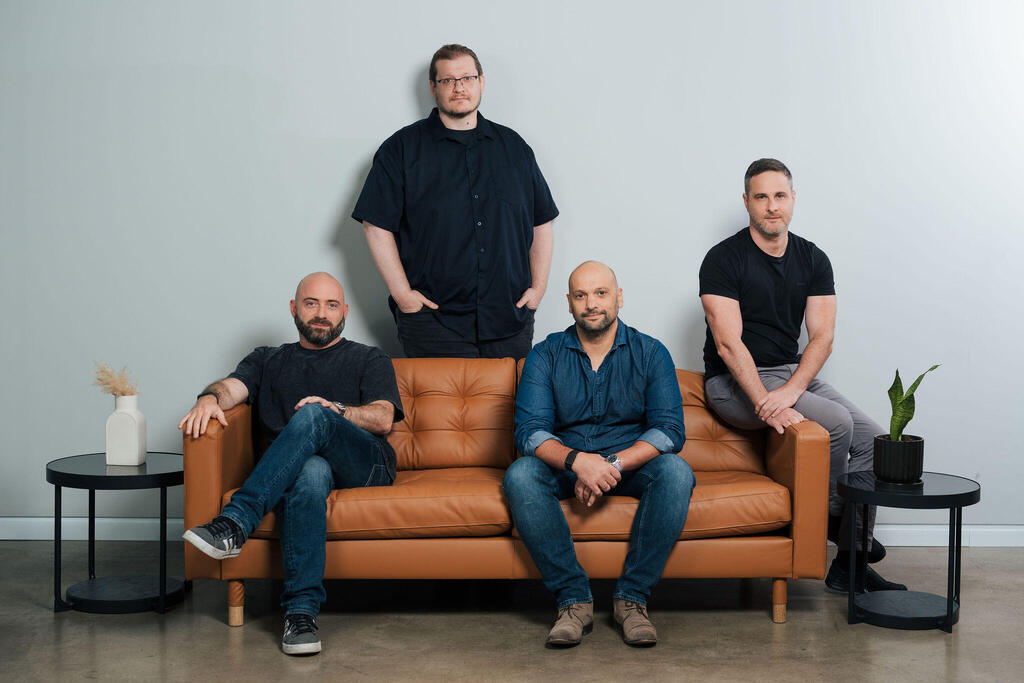
The company was founded in 2024 by Kardashov, Dima Karger, Pavel Bibergal and Vitaly Bukhovsky. Kardashov and Bukhovsky previously built TestProject, which was acquired by Tricentis in 2019, and Devalore, which was acquired by Abra in 2022. Bibergal previously served as CTO at Plarium, while Karger led one of the gaming company’s largest studios.



