











The Israeli musician who accidentally crashed the Internet 30 years ago
In 1996, Izhar Ashdot sent an email without using BCC and inadvertently triggered a chain of email loops that overwhelmed Israel's young Internet infrastructure and was reportedly felt in the United States.
On August 12, 1996, when only about 60 million people worldwide were connected to the Internet and bandwidth was still severely limited, a young Israeli musician inadvertently set off a chain of events that temporarily disrupted Internet service in Israel and had repercussions as far away as the United States.
In a video released this week to mark the 30th anniversary of the incident, musician and producer Izhar Ashdot describes how an email he sent to a large mailing list, without using BCC, triggered a series of endless email loops that overwhelmed the limited network and slowed Internet access for large numbers of users.
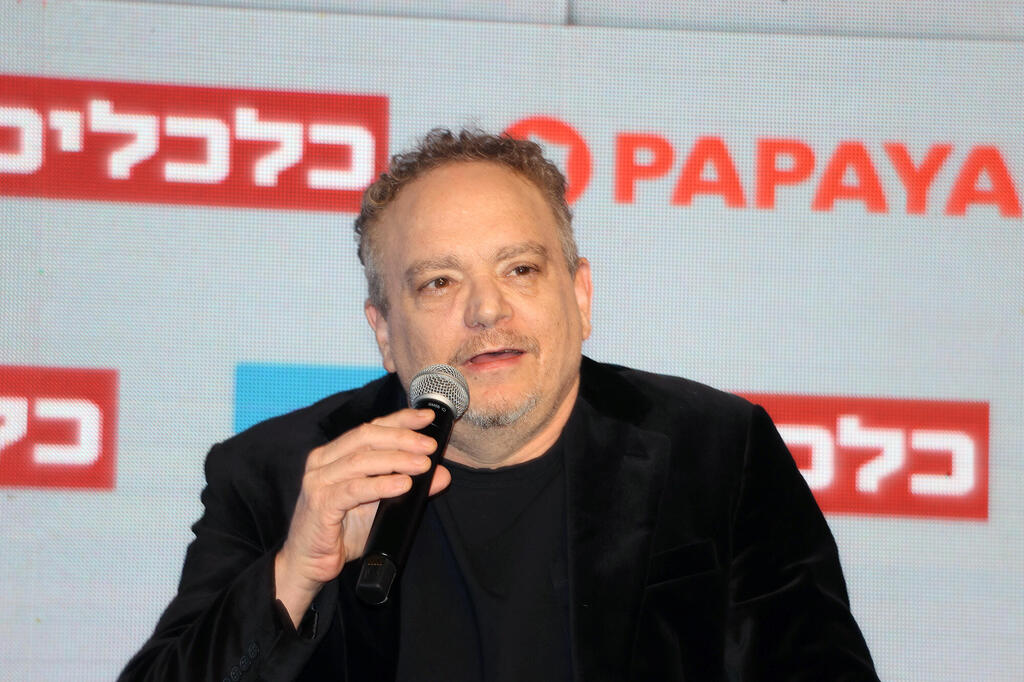
"I was sitting in my room with a Macintosh computer and working on the Internet like every night. I received a very large email from the United States, and I replied to it with a story about my new album," Ashdot says in the video. "Then this kind of terribly strange process of lots of loops began. I saw that lots of people replied to me angrily, so I went to sleep."
Dudi Goldman, then a technology reporter for Yedioth Ahronoth, learned about the incident from an executive at one of Israel's Internet service providers and reported on it the following morning on the front page of the country's largest-circulation newspaper.
"Izhar Ashdot 'breaks' the Internet," the headline read.
According to Goldman, Ashdot had circulated an email about his new album, triggering a chain reaction that caused widespread congestion. The disruption was reportedly felt even in the United States, where U.S. senators, including Phil Gramm and Kay Bailey Hutchison, complained about the Internet slowdown.
Ashdot learned about the incident only after reading the newspaper article. Looking back, he says in the video: "It's not that I was being a bully, I just wanted to promote my album."
He adds that the episode offers a lesson that remains relevant three decades later, particularly in the age of artificial intelligence. "And maybe it shows that even today with AI, light years after the early days of the Internet, there is a new ethic to learn, to get used to, to fight for."
Ashdot, who began his musical career as a member of the popular Israeli band Tislam, went on to become one of the country's leading musicians and producers. In the 1980s, he also made inroads into the international music market, producing remixes for singer Ofra Haza, including Im Nin'alu, that was later sampled by European and American pop and rap artists.
He later produced Haza’s album Shaday that sold more than 1.5 million copies worldwide and became an international bestseller.
Ashdot has maintained a close relationship with technology throughout his career. As early as the 1980s, he was among the Israeli pioneers of drum machines, including the Roland 808 and LinnDrum, as well as synthesizers and other electronic instruments. He used the technology to take greater control over the creative and production process and became one of the first Israeli artists to incorporate computers extensively into his work.
In 1995, he became the first Israeli artist to establish his own website.
In recent years, Ashdot has turned his attention increasingly to artificial intelligence. He uses AI tools to create drum patterns, work on arrangements, remove noise and brainstorm ideas for writing. He also lectures about his experiences with the technology and takes an optimistic view of its role in creative work, arguing that AI can expand an artist's creative possibilities rather than necessarily replace the artist.



