










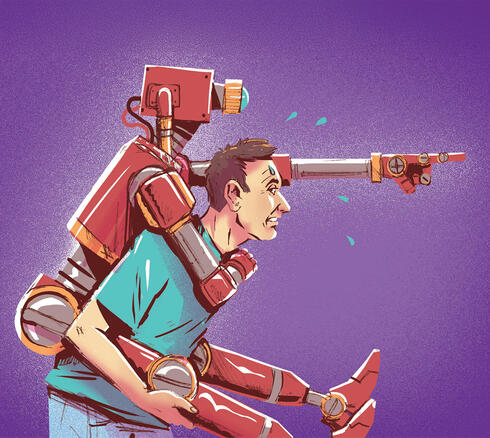
America's AI economy is creating jobs, and putting millions at risk
While founders are launching companies faster than ever, researchers warn that millions of white-collar workers face growing disruption.
Here Now Health is not an AI company. Yet its rapid journey from an idea in founder Michelle Turner's mind to an operating mental health platform for foster children relied heavily on the technology now reshaping the U.S. economy.
Working from her home in Virginia Beach, Turner used AI tools to teach herself the fundamentals of startup building, develop a business plan, and refine presentations for early-stage investors. Funding soon followed, and the company, launched in January 2025, now employs 16 people and is certified in three states to provide Medicaid-funded mental health counseling for children entering the foster care system, a gap in care Turner identified through her own experience as a foster parent.
"A mom of six kids who's a first-time founder, who's a sole female founder, should not be able to raise venture capital. I don't have an MBA. I don't have these things to back me up," Turner said. Developing her funding pitch with AI guidance was "like going to a master's-level class every day with the robot. It was my startup advisor."
The rapid emergence of artificial intelligence has become one of the defining forces shaping the U.S. economy and is drawing close attention from Federal Reserve officials seeking to understand its impact on productivity, economic growth, inflation, and employment.
As part of a broad strategic review launched by new Federal Reserve Chair Kevin Warsh, one panel will focus exclusively on AI and its implications for productivity. Higher productivity could allow the economy to grow faster with less inflation, but it could also reduce the number of workers needed to produce the same level of output.
Some Fed officials have already raised the possibility that AI could lead to structurally higher unemployment. Other economists point to the long-term decline in labor's share of national income and question whether AI will further shift income toward owners of capital, raising broader social and political questions.
Much as companies like Yahoo and America Online once competed to bring consumers onto the internet, today's AI companies are competing with increasingly sophisticated models capable of performing complex tasks, solving problems, and writing software, not simply helping people browse the web.
Investment in AI infrastructure, particularly data centers, is fueling economic growth while also driving up demand for electricity, construction, and skilled labor. Predictions about AI's long-term impact vary dramatically, ranging from unprecedented economic abundance to widespread job displacement, as businesses, governments, and militaries race to adopt, and defend against, the technology.
"Markets are confronted with dramatically different competing narratives," Jean Boivin, head of the BlackRock Investment Institute, said during a seminar with journalists on Tuesday.
"We are framing this as scarcity versus abundance. Scarcity is the story of the moment," he said, referring to the investment boom driving up costs and demand for capital. "But we are also talking about abundance... AI can lead to significant breakthroughs... growth that might be breaking out of a 2% world."
Turner's experience sits somewhere between those competing visions.
Her journey from nonprofit manager to CEO of a growing healthcare company illustrates what John Bailey, a nonresident senior fellow at the American Enterprise Institute and adviser to one of Here Now Health's investors, believes is becoming increasingly common.
"For small entrepreneurs, things that used to take too much time or cost too much, the cost of access has fallen close to zero," Bailey said. Having helped Turner identify and use the AI tools she relied upon, he argues that the technology is allowing entrepreneurs to scale businesses more quickly.
"These are not AI companies," he said. "They are traditional companies delivering services more efficiently, more quickly, and at lower cost."
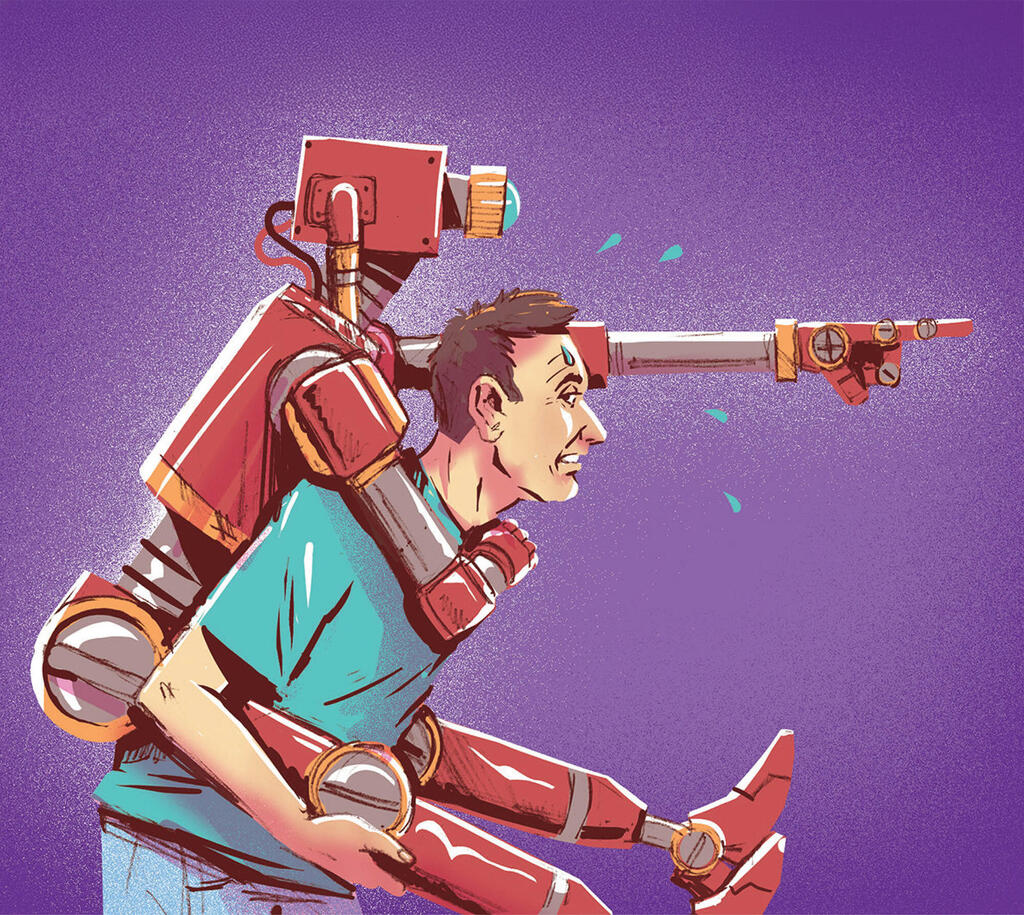
Public debate, however, remains focused largely on AI's potential to eliminate jobs. The technology has been linked to rounds of layoffs across the technology sector and has enabled many companies to reduce back-office and administrative staffing.
Bailey believes AI will reshape jobs more than eliminate them, much as previous waves of technological innovation ultimately transformed rather than destroyed employment.
He is not alone.
Torsten Slok, chief economist at Apollo Global Management, attributes the recent increase in new business formation partly to AI, arguing that it is "dramatically reducing the cost and complexity of launching a company. As these firms scale, they will create jobs."
Whether those jobs ultimately outweigh those displaced by AI remains an open question.
A recent rebound in hiring has eased concerns that the U.S. economy had already entered an era in which technological progress would reduce employment overall, a historic break from previous technological revolutions that ultimately created more jobs than they destroyed.
Thomas Barkin, president of the Federal Reserve Bank of Richmond, has acknowledged that AI poses genuine employment risks. At the same time, he says many businesses report that AI is helping them cope with persistent labor shortages in skilled occupations by making existing workers more productive.
"We are all quick to see the disasters, which is about jobs getting replaced," Barkin said.
But many employers in sectors such as manufacturing and auto repair continue to tell him they cannot hire enough workers and are using AI to increase productivity rather than replace staff.
"It is still going to be a challenge. It is a 'Rust Belt risk,'" Barkin said, referring particularly to white-collar occupations. "But we are not an economy that has no shortages."
History suggests the transition could still prove painful.
Globalization in the 1990s devastated many long-established U.S. manufacturing communities, while efforts to retrain displaced workers largely failed. The resulting economic decline has been linked by many researchers to political polarization and increases in substance abuse and so-called "deaths of despair."
Researchers behind a recent study warned that AI could produce a similar shock for clerical, administrative, and other office workers, particularly those without college degrees who rely on experience rather than formal education to advance their careers.
The study, conducted by the Brookings Institution and Opportunity@Work, estimates that roughly 23 million Americans are on career paths leading toward occupations that are highly exposed to AI automation, potentially trapping many in lower-paying jobs.
"Disruptions in these roles can have outsized effects on workers' ability to move into higher-wage work," the researchers wrote. They found the greatest exposure in Florida, the Northeast, Texas, and California, regions that differ significantly from the manufacturing communities most affected by globalization.
For the Federal Reserve, both the pace and ultimate outcome of AI adoption will matter. The short-term effects on employment and inflation may differ significantly from the longer-term benefits if AI delivers the productivity gains many economists anticipate.
At his first press conference as Fed chair, Warsh described AI as "the most important economic change that we've had in my adult lifetime."
The United States, he said, "is ultimately going to be better off" because of the technology.
"But that certainly doesn't mean it's not going to be disruptive."



