










Unit 8200 soldier recognized as disabled veteran after stress-related illness ruling
The court found that long hours, operational responsibility and the inability to escape military conditions distinguished the soldier’s experience from ordinary civilian employment.
An Israeli court has recognized a former Unit 8200 soldier as a disabled veteran after ruling that the intense stress she experienced during her military service contributed to the onset of Graves’ disease, an autoimmune disorder affecting the thyroid.
The soldier, represented by attorney Yoav Almagor enlisted in 2016 and was later assigned to an operational techno-intelligence role in Unit 8200. According to her testimony, the position involved long hours, limited breaks, strict demands for accuracy and significant responsibility for sensitive intelligence. She said the pressure continued after her shifts, affecting her ability to sleep and disconnect from work.
2 View gallery
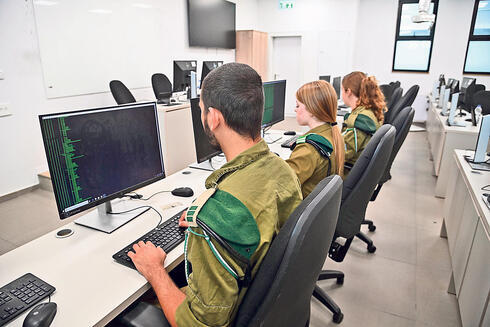
Unit 8200. The soldiers in the photo are not connected to the story.
(Photo: Hertzel Yosef)
Her workload increased further in 2017, when she was required to complete a professional certification quickly and later take on responsibility for training new soldiers. Most of her requests to reduce her shifts were rejected.
After several months, she began experiencing severe weakness and a sharp decline in her physical abilities. During a five-kilometer race at the base, she managed to run only about 100 meters before stopping. Medical tests subsequently diagnosed her with Graves’ disease, and she was discharged from the IDF in July 2018.
The Ministry of Defense rejected her request to have the illness recognized as service-related, arguing that long hours, workplace pressure and professional responsibility also occur in civilian technology jobs. It also noted that she had not been exposed to combat, a life-threatening situation or a specific traumatic event.
The case centered on whether stress can trigger Graves’ disease. Medical experts on both sides agreed that there is no definitive scientific proof of a causal relationship. The expert representing the soldier, however, argued that there is broad medical evidence linking significant psychological stress to the onset of the disease in people with a predisposition to it.
The court ultimately ruled in the soldier’s favor. The judges rejected the argument that military service in a technology unit should be treated as equivalent to civilian employment, noting that soldiers cannot simply leave their workplace, reduce their hours or distance themselves from the source of stress.
The court also pointed to the timing of the soldier’s deterioration. Medical records showed a sharp decline in her physical fitness by November 2017, shortly after the periods of intense workload she had described.
The judges characterized the case as a borderline one but concluded that the overall evidence established a sufficient medical and legal connection between her service conditions and the onset of the disease. The Ministry of Defense was ordered to cover her legal costs.
The case will now move to a medical committee, which will determine the degree of her disability and the benefits to which she is entitled.
The ruling does not mean that stress during military service will automatically qualify as a service-related disability. But it establishes that significant psychological pressure in a non-combat military role can, under certain circumstances, form part of the basis for such recognition.



