









After his daughter’s brain hemorrhage, Bill Ackman commits $400 million to brain research
The billionaire investor says his daughter Lucy’s recovery convinced him that medicine and technology can do more for patients with catastrophic brain injuries. His new nonprofit will focus on rehabilitation, neuroscience, brain-computer interfaces and longevity.
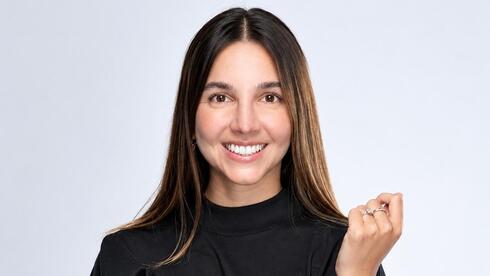
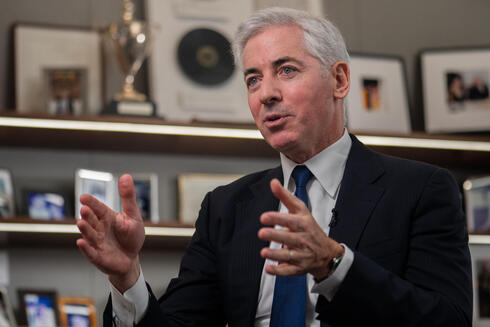
Bill Ackman and his wife, Neri Oxman, are committing approximately $400 million to establish a new nonprofit institute focused on brain research, rehabilitation, recovery and human longevity, following the recovery of Ackman’s daughter from a severe brain hemorrhage earlier this year.
Ackman, founder and CEO of Pershing Square Capital Management, disclosed the gift in a post on X on Wednesday. The donation consists of 10 million shares of Pershing Square, which Ackman said are intended to provide the institute with a long-term financial base through the appreciation of the shares and their expected dividend income.
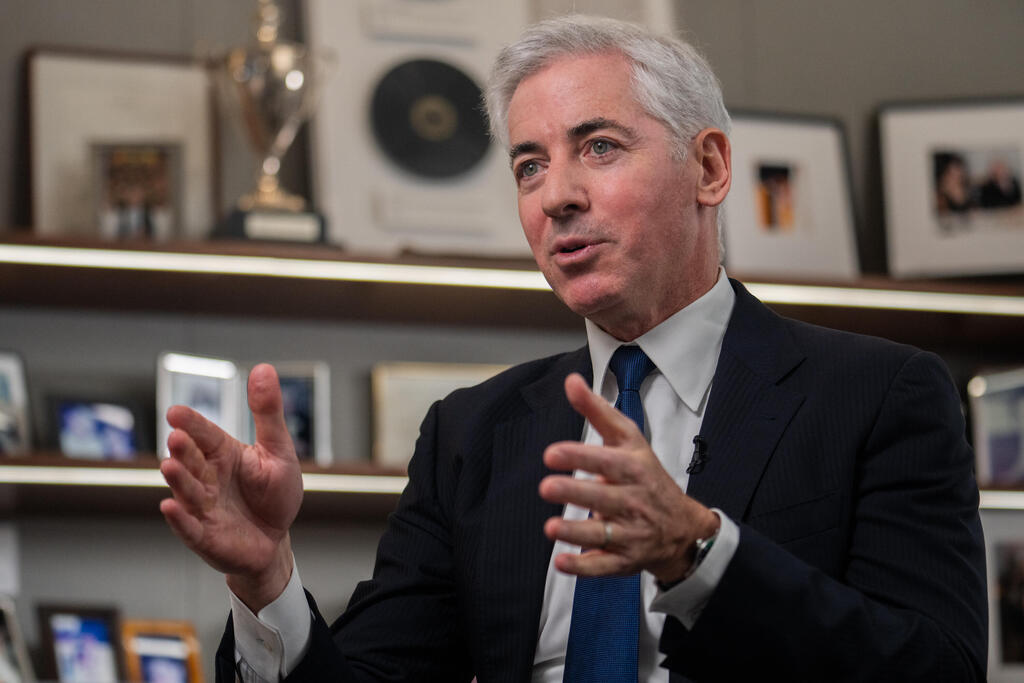
The institute, which will be called the Ackman Oxman Institute, or AOI, is being established as a patient-focused organization combining medical research, treatment and rehabilitation with artificial intelligence, brain-computer interfaces and venture capital.
Ackman said the couple will also announce an additional donation of similar or potentially greater size that will provide the institute with funding for its early years.
The project grew out of the medical crisis involving Ackman’s 26-year-old daughter Lucy, who suffered a massive brain hemorrhage in February. According to Ackman, she was found unconscious in her apartment in Brooklyn and underwent emergency surgery more than 19 hours after the hemorrhage occurred.
Lucy spent several weeks in a coma and initially could not breathe independently, walk, see or speak. Ackman said that six months later she has regained her cognition, can understand her surroundings, can walk more than 100 steps at a time with assistance and is beginning to produce sounds and the early stages of speech. She remains unable to see.
Her treatment has been led by neurosurgeon Chris Kellner and David Putrino, director of rehabilitation innovation for the Mount Sinai Health System.
Ackman said the experience led him to conclude that there was an opportunity to create an institution that could systematically apply the lessons learned from individual patients to others.
The planned institute will be based on Manhattan’s West Side. In May, the Pershing Square Foundation acquired a newly built 400,000-square-foot biotech facility on West End Avenue that Ackman said was 93% vacant.
The foundation has also put under contract an adjoining 130,000-square-foot building at 320 West 66th Street, currently used by Saturday Night Live for studio space. Ackman said the building will be converted into rehabilitation facilities and is expected to close in December.
The family is also acquiring an adjoining vacant lot with additional air rights. Ackman said the existing zoning rights would allow the campus to reach approximately 680,000 square feet across 3.4 acres, before any potential increase in permitted development.
The institute will bring together neurosurgery, neuroscience, rehabilitation, nutrition, brain-computer interface and medical-device development, human trials, hyperbaric oxygen treatment and longevity research.
Ackman said the institute will work with multiple hospitals and medical schools rather than establishing exclusive relationships. Mount Sinai is expected to be an important partner.
The organization will also have a venture funding arm. Ackman said the AOI will seek to develop technologies and treatments that can be turned into companies, which the institute would seed and support before spinning them out. The economic returns from those companies, along with revenues and royalties, would be reinvested into the institute.
The structure reflects Ackman’s preference for a more commercially oriented approach to research. He said the AOI would not be primarily focused on producing academic papers or winning scientific awards, but on developing treatments, devices and rehabilitation techniques that can reach patients more quickly.
“We will be laser-focused on cures, treatments, devices, rehabilitation and exercise equipment,” Ackman wrote, adding that the goal would be to accelerate the process “from idea to innovation to production to helping a patient.”
Ackman also criticized the traditional university research model, arguing that universities have become less attractive because of politics, disruptions to learning, antisemitism and declining funding. He said the couple had considered establishing a brain institute five years ago but concluded that real estate costs and difficulties recruiting academic talent made the project impractical at the time.
The availability of a large biotech property at what Ackman described as a 70% discount changed the economics of the project, while advances in artificial intelligence have also made the initiative more feasible, he said.
The institute is also expected to focus heavily on brain-computer interfaces. Ackman said Lucy’s vision and other neurological functions may eventually require such technology and pointed to companies including Neuralink, Precision Neuroscience, Science, Synchron and Nudge as working in the field.
He said the AOI would seek to participate in the development of such technologies rather than simply fund academic research.
Ackman has assembled a board that includes Dean Kamen, Regeneron CEO George Yancopoulos, Nobel laureate James Rothman, neuroscientist Bernardo Sabatini, neurosurgeon Chris Kellner, Pershing Square Foundation CEO Olivia Flatto, Neri Oxman and Ackman himself.
The institute has identified a CEO whom Ackman expects to announce by October and is beginning searches for a chief scientific officer, chief AI and technology officer, chief operating officer and chief financial officer.
The initiative represents a significant expansion of Ackman’s philanthropic activity into medicine and neuroscience. Ackman is best known as the founder and CEO of Pershing Square Capital Management, the investment firm he founded in 2003.



