










Trump turns the economic war on Iran into a test of China
Washington is moving beyond sanctions on Tehran itself and threatening the banks, companies and trading hubs that keep Iran’s economy functioning. The UAE’s decision to cut economic ties has intensified the pressure, but China will determine whether the strategy can truly bite.
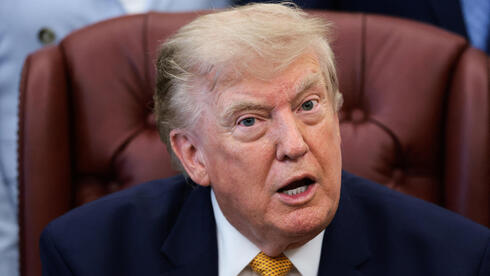
US President Donald Trump declared an “economic war and isolation on an unprecedented scale” against Iran last night, marking a new escalation in the campaign his administration has been waging since April under the name “Operation Economic Fury.”
Behind the dramatic wording lies an important shift: Washington is no longer content with trying to punish Iran itself. It is threatening to punish those that allow the Iranian economy to continue functioning, banks, companies, airports, shell companies, money changers, shipping registries and countries that provide Tehran with what Trump described as a “lifeline.”
The announcement came two days after Washington suspended diplomatic talks with Tehran, following what Trump described as Iran’s failure “to reach an agreement” after being given its “greatest opportunity.”
The strategy is based on the logic of secondary sanctions: force companies and governments doing business with Iran to choose between access to the Iranian market and access to the US and the international financial system.
In recent months, the US Treasury Department has already built much of the infrastructure for such a campaign. It has imposed sanctions on independent refineries in China that purchase discounted Iranian oil, as well as on Iran’s shadow fleet, front companies and money changers accused of transferring billions of dollars for Iranian banks. In April, the Treasury also warned financial institutions against working with Chinese refineries and made clear that foreign banks assisting them could themselves face secondary sanctions.
The UAE’s announcement on Tuesday illustrates both how painful the new environment has become for Iran and how fragile its remaining economic channels are.
Abu Dhabi announced the suspension of all trade, commercial activity and financial transactions with Iran until further notice, after claiming that two Iranian ballistic missiles had been fired at the UAE. Tehran denies the allegation. The announcement also followed a series of attacks on tankers belonging to the state-owned oil company ADNOC in recent weeks.
The UAE’s decision was driven first and foremost by security considerations rather than simply coordination with Washington’s economic campaign. But the economic result is the same: Dubai, which for years served as one of the important lifelines of the Iranian economy and a major center for the re-export of goods, payments and currency exchange, has effectively closed its door.
Iranian economic media have estimated that trade between the two countries reached about $25 billion before the war, much of it involving goods from third countries that passed through the Emirates.
The timing is particularly difficult for Tehran. The dollar is currently trading at around 1.9 million rials on the free market. According to the Iranian Statistics Center, annual inflation reached 66% in July, while food prices were 128% higher than a year earlier.
With the Emirates moving against Iran, Trump faces a far more consequential test: China.
More than 80% of Iranian oil transported by sea reaches China. As long as Chinese refineries continue buying Iranian crude and Chinese banks and companies continue facilitating payments, Tehran retains a major source of foreign currency.
If Washington manages to force them to pull back as well, the pressure on Iran could increase dramatically. But aggressive enforcement against Chinese companies and financial institutions would also risk opening a new economic front with Beijing, potentially prompting a response in other areas of trade.
That makes China fundamentally different from the UAE. Washington can pressure smaller trading and financial centers relatively effectively, but forcing China to abandon a major source of discounted energy would be a far more difficult undertaking.
Iran is unlikely to simply accept the loss of its established trade routes. It can attempt to channel more commerce through Iraq, Turkey, Pakistan, Russia and Central Asia, while expanding its use of the yuan, gold and barter arrangements. It can also create new layers of shell companies and intermediaries to obscure transactions.
But every additional layer makes trade more expensive and cumbersome. More importantly, each alternative depends on governments, banks and companies being willing to risk US sanctions.
That is precisely the calculation Trump is now trying to impose on the global businesses that still deal with Iran: not whether they can technically continue trading with Tehran, but whether doing so is worth the potential cost.
The Strait of Hormuz adds another, more complicated dimension.
Iran has already used the strait as a key lever in the current war, and commercial traffic through it has been limited since late February. Some traffic continued this week, but it remained highly erratic. According to Kpler, nine cargo ships passed through the strait yesterday, after days when there was almost no traffic.
Brent crude was approaching $94 a barrel on Thursday. Trump is therefore opening a new economic front at a moment when one of the world's most important energy chokepoints is already under pressure.
For Tehran, maintaining restrictions on traffic through Hormuz is one of the few tools it has to impose an economic cost on its opponents. But it is also an expensive weapon for Iran. The more Gulf trade is disrupted, the more damage is done to Iran’s relationships with its neighbors and the greater the incentive for those countries to distance themselves from Tehran.
The UAE’s decision this week to cut economic and financial ties with Iran illustrates precisely that risk.
Iranian Foreign Minister Abbas Araghchi called the American move “economic terrorism” on Thursday and argued that continuing US policy would lead to further failures. Iranian media have sought to portray the return to sanctions as evidence that Washington has failed to achieve its objectives through military means.
But the real test of the new strategy will be far more practical.
Can the United States persuade China, regional banks, shipping companies and the trading centers surrounding Iran that doing business with Tehran has simply become too expensive and dangerous?
If Washington succeeds, Iran will still have ways to circumvent the restrictions. But each new route is likely to be narrower, more expensive and more vulnerable than the one before it.
That is the economic war Trump is now trying to wage: not simply against Iran, but against the network that allows Iran to keep trading.



