










Teva’s $40 billion comeback brings Wall Street’s biggest prize into view
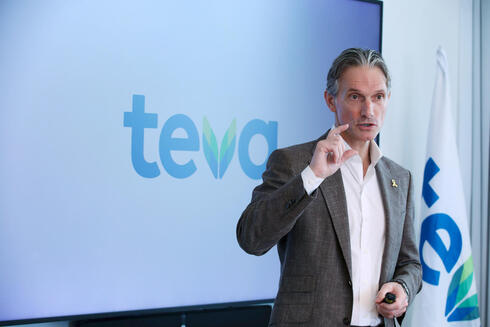
After years as a struggling generic-drug giant, Teva’s transformation under Richard Francis has pushed its valuation above $40 billion and raised the possibility of joining the S&P 500.
The sharp jump in Teva’s stock, following the release of its second-quarter results, pushed the company’s market value above $40 billion and completed a gain of more than 100% over the past year. As a result, Teva is now beginning to flirt with the possibility of eventually joining the flagship U.S. stock index, the S&P 500.
Wall Street has embraced the moves led by CEO Richard Francis, who in just a few years has transformed Teva from a company identified primarily as a generic-drug giant into a pharmaceutical company focused on higher-margin innovative medicines. The transformation has not only restored investor confidence in the stock but has also changed the way the market values the company.
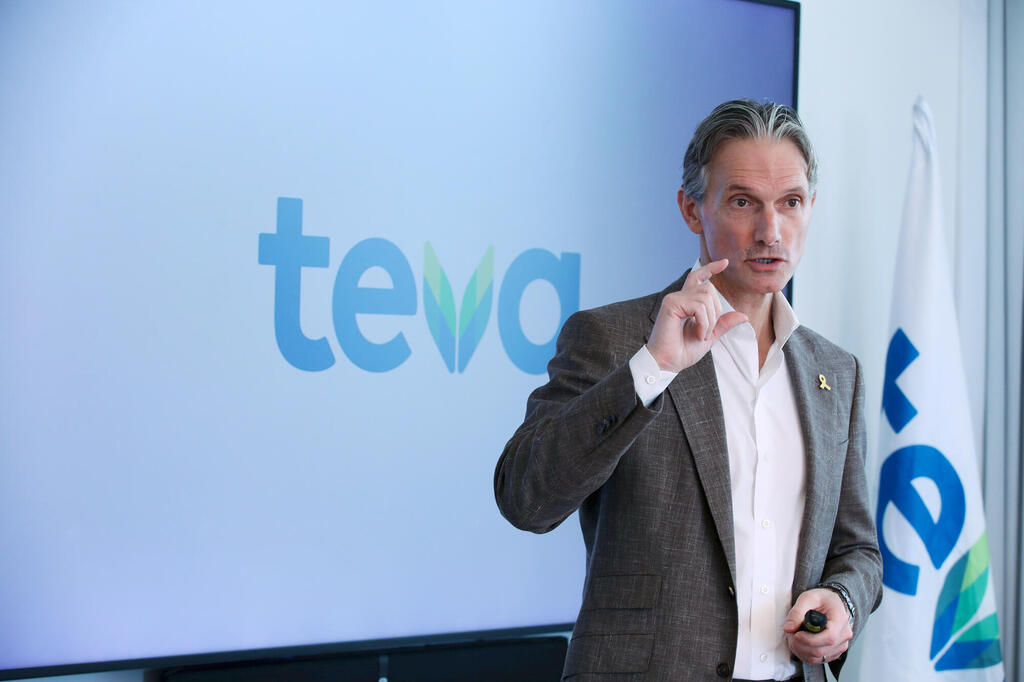
Teva is currently trading at earnings multiples similar to, and in some cases higher than, those of innovative pharmaceutical giants such as Pfizer and Sanofi. At the same time, the company’s credit rating upgrade to investment grade, for the first time in more than a decade, has returned it to the radar of international investors, years after it lost its status as the “people’s stock” of the Tel Aviv Stock Exchange.
Against this backdrop, and alongside the publication of its second-quarter financial results, Teva announced another strategically significant move: a plan to directly list its shares for trading on the New York Stock Exchange.
Teva, which was first listed in Israel and only later began trading in the U.S., has been traded for nearly four decades through American Depositary Receipts (ADRs). This structure has prevented some institutional investors from purchasing the stock and has complicated its potential inclusion in major indexes.
Eli Kalif, Teva’s CFO, told Calcalist that following the completion of the direct listing, scheduled for September 14, the company could become eligible for inclusion in the Russell 1000 index and later, if its market value continues to rise, potentially also the S&P 500.
“We are receiving more and more inquiries from investors who want to hear Teva’s story,” Kalif said.
Indeed, Teva’s story today looks dramatically different from a few years ago. The company’s three main originator drugs generated combined quarterly revenue of more than $1 billion for the first time. At the same time, Teva has five drugs in advanced development stages with significant commercial potential that are expected to reach the FDA over the next five years, alongside a portfolio of 15 biosimilar products that is expected to nearly double to 29 products in the coming years.
This potential has not yet fully translated into revenue growth or profitability, but investors view the pipeline as a valuable source of future growth that remains relatively inexpensive compared with the company’s current valuation.
The main growth engine is Duvakitug, a drug being developed for inflammatory bowel diseases, which was recently joined by Ecopipam, a treatment for Tourette syndrome, following Teva’s $700 million acquisition of U.S.-based Emalex.
The acquisition, completed in June, weighed heavily on second-quarter results, but investors appear willing to absorb the temporary hit to profitability in exchange for Ecopipam’s potential. The drug has received orphan drug designation and is being reviewed through an accelerated regulatory pathway at the FDA.
Teva’s results reflect the company’s ongoing transformation. Although it slightly missed analysts’ earnings-per-share forecasts, it exceeded revenue expectations, reporting sales of $4.1 billion.
For the first time, revenue from innovative medicines crossed the $1 billion mark in a single quarter, rising 43% compared with the same period last year.
Austedo, Teva’s flagship treatment for movement disorders, increased revenue by 40% to $696 million. Ajovy, its migraine treatment, grew 56% to $244 million, while Uzedy, its newer schizophrenia treatment, generated $77 million in revenue, up 43%.
Following the strong performance, Teva raised its combined revenue forecast for the three drugs to $3.7 billion this year, representing 17% growth.
The increase in innovative medicines offset a 15% decline in Teva’s generic-drug business, which was affected, among other factors, by the loss of revenue from Revlimid following the end of the agreement that allowed Teva to market a generic version of the drug.
On the earnings side, results were heavily impacted by the completion of the Emalex acquisition. Research and development expenses surged to $970 million, compared with $244 million in the corresponding quarter, primarily due to a one-time $726 million charge related to the transaction.
As a result, Teva reported an operating loss of $231 million, compared with operating income of $455 million in the same quarter last year, and ended the quarter with a net loss of $576 million.
Excluding one-time expenses, most of which were related to the Emalex acquisition, Teva reported adjusted earnings of 2 cents per share, below analysts’ expectations of 11 cents. However, because the acquisition-related expense was primarily accounting-related, it did not affect cash generation, with free cash flow reaching $622 million.
At the same time, Teva continues to seek a buyer for TAPI, its active pharmaceutical ingredients division, despite announcing a broader operational efficiency plan. According to Kalif, the company still views TAPI as a non-core business and intends to complete its sale after “building a new strategy.”
Despite the temporary impact on profitability, Teva maintained its annual guidance. The company expects revenue of $16.5 billion-$16.85 billion, adjusted operating profit of $3.8 billion-$4 billion, including approximately $770 million in expenses related to the Emalex acquisition, adjusted earnings of $1.91-$2.10 per share, and free cash flow of $2 billion-$2.4 billion.



